Kookaburra is the world's most-used cricket ball manufacturer and one of cricket's oldest surviving brands. Founded in Melbourne, Australia in 1890 by Alfred Grace Thompson, the company began as a small leather ball-maker and has grown into the official ball supplier for ODI cricket, T20 internationals, and domestic competitions across Australia, South Africa, Pakistan, Sri Lanka, New Zealand, and most of Asia. This is the story of how a 135-year-old family business came to define the sound, feel, and behaviour of modern cricket.
The Founding: Melbourne, 1890
Alfred Grace Thompson was a saddler by trade who began making leather cricket balls as a side business. The first Kookaburra balls were hand-stitched in a small Melbourne workshop using Australian cattle hide. The brand was named after the native Australian kookaburra bird, a symbol chosen for its distinct Australian identity.
By the early 1900s, Kookaburra had become a known name in club cricket across Victoria. The business stayed in family hands for generations, eventually becoming Kookaburra Sport, which remains privately held today.
How Kookaburra Cricket Balls Are Made?
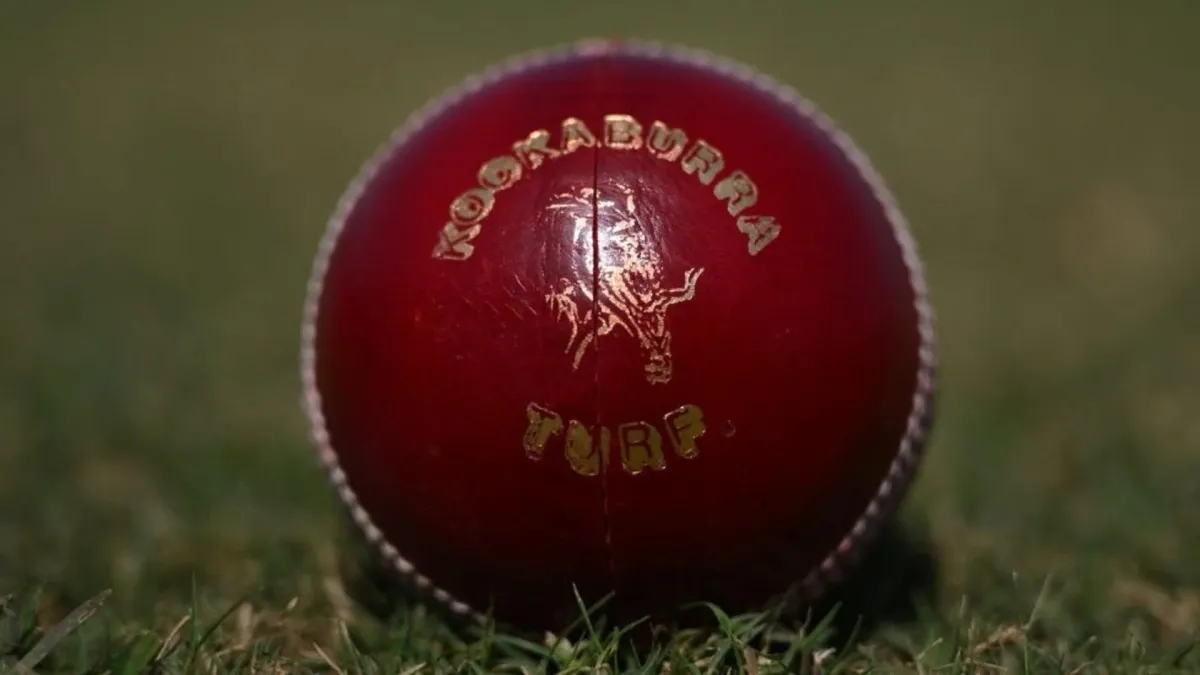
Kookaburra is best known for its cricket balls, particularly the red Test match ball and the white ODI/T20 ball. The manufacturing process follows traditional methods with modern quality control:
Cork core: Layered cork wrapped in tightly wound string, giving the ball its official weight of 155.9g-163g
Leather casing: Four pieces of alum-tanned cowhide, sourced primarily from Australia and India
Machine-stitched seam: Unlike Dukes (hand-stitched), Kookaburra uses machine stitching on the outer rows with hand stitching on the inner two rows
Lacquer finish: Aniline dye for red balls, polyurethane coating for white balls
This machine-stitching method is why Kookaburra balls behave differently from Dukes. The seam is slightly flatter and wears faster, typically losing its pronounced shape after 20-30 overs. This is why Australian and Asian pitches see conventional swing disappear earlier than English conditions with Dukes balls.
From experience: The first time I bowled with a brand-new Kookaburra in a match, the seam felt noticeably less pronounced than the Dukes balls I had practiced with. You had to work harder to get swing and you had a smaller window before the ball went soft. But when it did swing, it moved quickly. Knowing what ball you are playing with changes everything about bowling strategy.
Global Reach: Where Kookaburra Dominates
Country / Competition | Kookaburra Use |
|---|---|
Australia (all formats) | Official ball since 1946 |
South Africa | Test and domestic cricket |
Pakistan | Test and domestic cricket |
Sri Lanka | Test and domestic cricket |
New Zealand | Test and domestic cricket |
ICC ODI & T20 Internationals | Official white ball worldwide |
England | Dukes used instead |
India | SG used for Tests; Kookaburra for domestic white-ball |
West Indies | Dukes used |
Outside of England, West Indies, and Indian Tests, Kookaburra is the default cricket ball. This means in every ODI and T20 international, both teams face the same Kookaburra white ball, giving the brand enormous influence over how limited-overs cricket is played.
Beyond Balls: Bats, Gloves, and Full Equipment
While cricket balls made Kookaburra famous, the company now produces a full range of cricket equipment:
Cricket bats: Both English willow and Kashmir willow bats, handcrafted in Melbourne
Protective gear: Pads, gloves, helmets, and body protection
Bags and accessories: Cricket bags, grips, and training aids
Hockey equipment: Kookaburra is also a major hockey brand
Professional cricketers who have used Kookaburra bats include Ricky Ponting, Adam Gilchrist, Brian Lara, Kumar Sangakkara, and AB de Villiers. The brand has consistently associated itself with some of cricket's most elegant stroke-makers.
The Sound of Cricket: The "Kookaburra Ping"
A Kookaburra red ball has a distinctive sound when struck well, a higher-pitched "ping" compared to the more muted crack of a Dukes ball against English willow. This is partly due to the harder lacquer coating and slightly firmer cork core.
For generations of cricket fans watching Australian summers or sub-continental tours, the Kookaburra sound is inseparable from the experience of cricket itself. It is one of those small sensory details that makes the game feel the way it does.
The Pink Ball Innovation
Kookaburra was instrumental in developing the pink cricket ball used in day-night Test matches. After years of trials, the first official day-night Test, Australia vs New Zealand at Adelaide Oval in November 2015, used a Kookaburra pink ball. The innovation helped extend Test cricket's viewing audience into evening hours and has since become a regular part of the international calendar.
The pink ball required new dye techniques and extra lacquer layers to stay visible under floodlights without affecting how it swung or seamed. It took Kookaburra nearly a decade of development to get right.
Controversies and Criticisms
Kookaburra's dominance has drawn criticism from cricketers who argue the machine-stitched seam makes the ball "too batting-friendly" in modern conditions. Bowlers like James Anderson and Pat Cummins have publicly noted that Kookaburra balls go soft quickly, reducing the advantage of swing and seam bowling in the middle overs.
This has led Cricket Australia and others to experiment with Dukes balls in Sheffield Shield matches to test if the different ball produces more even contests. The debate over ball behaviour is a reminder of how much one company's manufacturing choices shape the entire sport.
Conclusion
Kookaburra's 135-year journey from a Melbourne saddler's workshop to the world's default cricket ball is one of the great stories in cricket manufacturing. The company shapes everything from how a cricket ball behaves to how bowling strategy unfolds in limited-overs cricket worldwide. Whether you are facing a Kookaburra red ball in a Test or picking up a white ball for net practice, you are using equipment built on more than a century of Australian craftsmanship. For the broader story of how another iconic brand became Indian cricket's biggest name, read our piece on MRF Cricket.
FAQs
When was Kookaburra Sport founded?
In 1890 in Melbourne, Australia, by saddler Alfred Grace Thompson. The company has remained privately held and is still Melbourne-based.
Why do Kookaburra balls go soft faster than Dukes?
Kookaburra uses machine-stitched outer seams instead of fully hand-stitched, which makes the seam flatter sooner. The ball also uses slightly less pronounced lacquer.
Which international matches use Kookaburra balls?
All ODIs and T20 internationals worldwide, plus Tests in Australia, South Africa, Pakistan, Sri Lanka, and New Zealand.
Did Kookaburra invent the pink cricket ball?
Yes. Kookaburra developed the pink ball used in the first-ever day-night Test (Australia vs New Zealand, Adelaide, November 2015).