MRF is one of cricket's most unusual success stories, a tyre manufacturer that became so deeply associated with Indian cricket that the brand's logo on a bat is instantly recognised worldwide. MRF does not actually manufacture cricket bats. The company founded in Chennai in 1946 as Madras Rubber Factory has built its cricket legacy entirely through sponsorship, endorsement, and association with Indian cricket's greatest batters. From Sachin Tendulkar to Virat Kohli, MRF has put its sticker on the bats that scored over 40,000 international runs for India. This is the story of how a rubber company came to dominate cricket branding.
MRF: The Non-Cricket Origin
MRF was founded by K.M. Mammen Mappillai in 1946 as a small toy balloon manufacturer in Chennai (then Madras). By 1952, the company had transitioned into rubber manufacturing and renamed itself Madras Rubber Factory. Tyre production began in 1961.
Today, MRF Limited is India's largest tyre manufacturer with revenues over $3 billion. The company supplies Formula 1 development teams, Indian airlines, and military aircraft. Cricket is not and has never been a core business, but the sport became central to the brand's identity.
The Tendulkar Era: 1990s Partnership
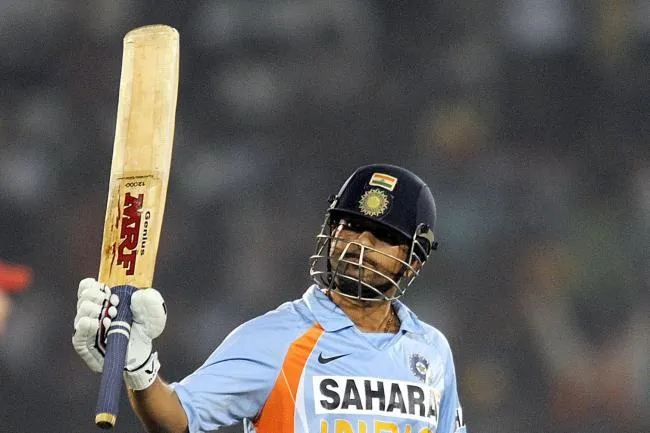
MRF's cricket story truly began in 1987 when the company sponsored Ravi Shastri. But the defining partnership came in 1990 when a young Sachin Tendulkar, then just 17 years old, signed with MRF as his bat sponsor. The deal was initially modest. Over the next 24 years, it became one of the most iconic sponsorship deals in sports history.
Tendulkar did not use MRF-manufactured bats. His bats were made by SS (Sareen Sports International) in the early years and later by Kashmir Willow specialists and bespoke Indian bat makers. MRF simply paid to have their sticker placed on whichever bat he used. This is standard practice in cricket, the sticker brand and the bat manufacturer are often different companies.
Tendulkar's bat with the red and white "MRF" sticker scored:
15,921 Test runs (world record)
18,426 ODI runs (world record)
100 international centuries (unique record)
From experience: Growing up in cricket culture in Pakistan and watching Indian cricket, the MRF sticker was the most visible brand in the sport. Every kid who played imaginary Test matches in their backyard put an MRF sticker on their bat or drew one on with marker. That visual recognition was built entirely through Tendulkar's runs. It was never about the product, it was about the association.
The MRF Pace Foundation
One of MRF's genuine contributions to Indian cricket is the MRF Pace Foundation, established in Chennai in 1987. The academy was founded under the guidance of former Australian fast bowler Dennis Lillee, who served as its director for over two decades.
Pace bowling had historically been a weakness of Indian cricket. The MRF Pace Foundation transformed this, producing bowlers including:
Javagal Srinath: India's first consistent 150 km/h bowler
Zaheer Khan: left-arm swing specialist with 311 Test wickets
Irfan Pathan: all-rounder and swing bowler
R.P. Singh: ODI and Test bowler
Glenn McGrath (director, post-Lillee era)
The foundation remains one of cricket's most respected bowling academies. Unlike the MRF sticker on bats, this is direct investment in cricket development, not just branding.
The Kohli Era: Continuing the Legacy
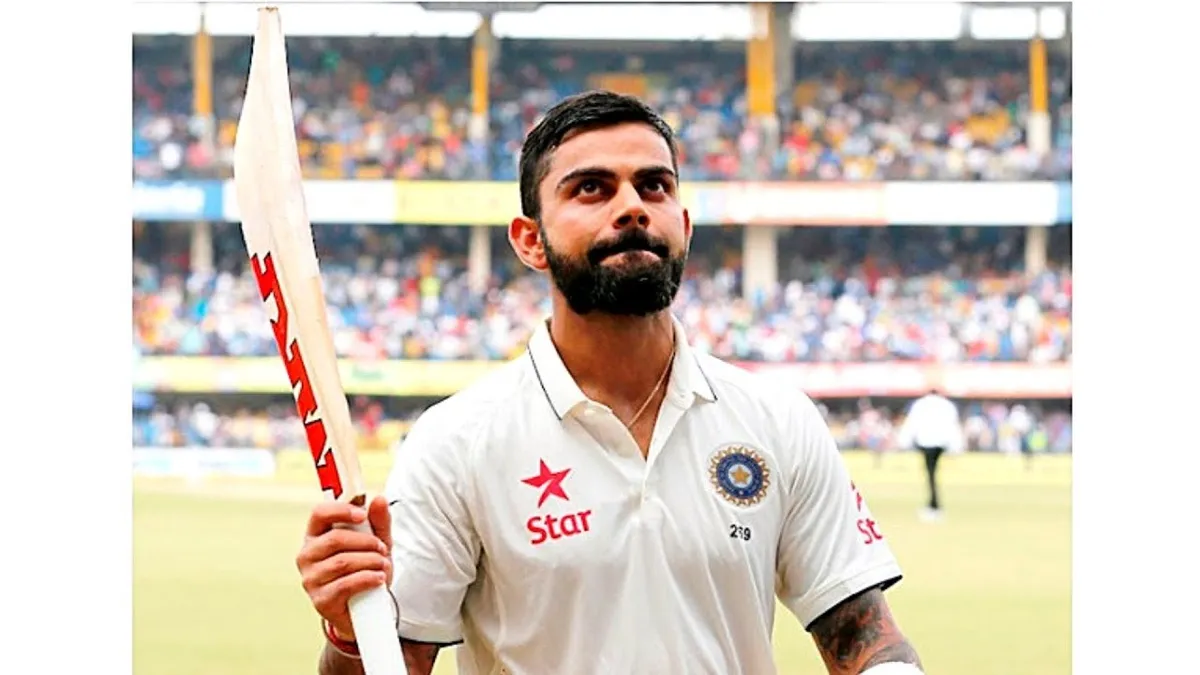
After Tendulkar's retirement in 2013, MRF needed a new flagship batter. They found him in Virat Kohli, who signed with the brand in 2017 on what reports called an 8-year, $12 million deal, one of the biggest bat sponsorship contracts ever.
Kohli, like Tendulkar, does not use MRF-manufactured bats. His match bats are produced by various specialist makers. The MRF "Genius Grand Edition" branding on his bat is the sticker brand only.
Since the partnership:
Kohli has scored over 27,000 international runs with the MRF sticker visible
The MRF logo has remained cricket's most globally recognised bat sponsor
Kohli is one of MRF's highest-paid brand ambassadors alongside tennis's Sania Mirza and Formula 1 legend Lewis Hamilton
Other MRF-Associated Cricketers
Player | Country | Era |
|---|---|---|
Sachin Tendulkar | India | 1990-2013 |
Virat Kohli | India | 2017-present |
Brian Lara | West Indies | 1994-2007 |
Steve Waugh | Australia | 1990s-2000s |
Gautam Gambhir | India | 2008-2016 |
AB de Villiers | South Africa | 2010s (briefly) |
Shikhar Dhawan | India | Recent years |
MRF's strategy has consistently been to partner with the era's most marketable batter rather than focus on volume sponsorships. This is why the brand feels premium despite being purely a sticker.
Why the MRF Model Works in Cricket
Cricket bat sponsorship is unique because most professional bats are handcrafted by small workshops. A sticker brand can attach itself to any high-quality bat. This separation allows companies like MRF, without any cricket manufacturing expertise, to dominate visibility.
MRF's approach has three key elements:
Long-term partnerships: multi-year contracts with marquee players rather than short deals
Focus on batters: the bat is the most visible equipment in cricket, unlike cricket shoes or gloves
Investment in development: the MRF Pace Foundation gives the brand credibility beyond marketing
Conclusion
MRF is cricket's most successful non-cricket brand. The company has never made a ball, a bat, or a pad in its century-long history, yet its logo is the most recognisable in cricket batting. Through Tendulkar, Kohli, Lara, and the MRF Pace Foundation, a Chennai tyre manufacturer built a cricket legacy that rivals brands that have been making the sport's equipment for over a century. It is a lesson in how sports branding works, sometimes the biggest names in a sport are not the ones making the products, but the ones paying to be associated with greatness. For the contrasting story of a brand that actually makes cricket equipment and shaped the sport through manufacturing, read about Kookaburra Cricket.
FAQs
Does MRF actually make cricket bats?
No. MRF is a tyre manufacturer. They sponsor players who use bats made by various specialist manufacturers, MRF only supplies the sticker branding.
When did Sachin Tendulkar sign with MRF?
In 1990, when he was 17 years old. The partnership lasted until his retirement in 2013, 24 years.
What is the MRF Pace Foundation?
A fast bowling academy founded in Chennai in 1987 under Dennis Lillee's direction. It produced India's first generation of 150 km/h pace bowlers.
How much did Virat Kohli's MRF deal cost?
Reports suggested an 8-year, $12 million contract signed in 2017, one of cricket's largest bat sponsorship deals ever.