Cricket batting gloves are sized by hand length and width, not by age. Most adults wear Mens or Mens Pro, but the right size depends on actual hand measurement, not assumption. Wrong-sized gloves cause blisters, slow your bat speed, and reduce grip on the handle. This guide covers junior to adult sizing, how to measure properly, and why a snug fit beats a loose fit every time.
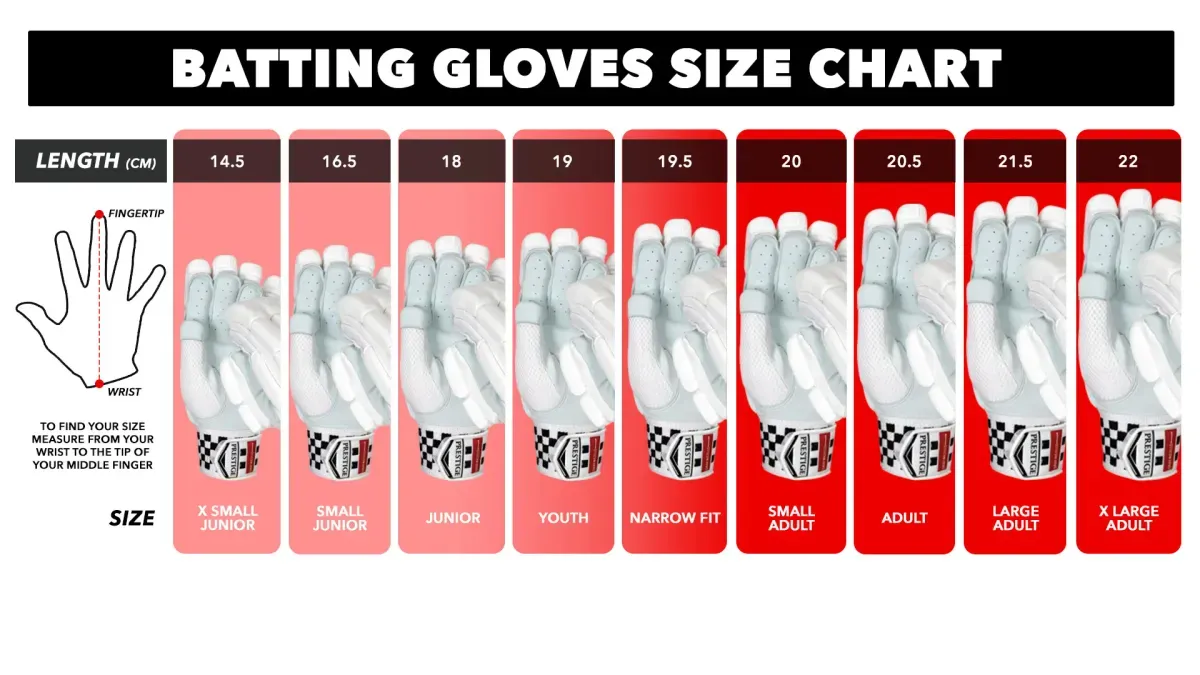
Cricket Glove Size Chart
Glove Size | Hand Length (wrist to fingertip) | Typical Age |
|---|---|---|
Small Junior | Under 14cm | 5-7 years |
Junior | 14-16cm | 7-9 years |
Youth | 16-18cm | 9-12 years |
Boys | 18-20cm | 12-14 years |
Mens (most common) | 20-22cm | 14+ / Adult |
Mens Pro / Long | 22cm and above | Adults with long hands |
Like junior bat sizes, glove sizing for kids is more about hand size than age. Measure first, then match to chart.
How to Measure Your Hand for Cricket Gloves
The simple method:
Place your dominant hand flat on a piece of paper, fingers together
Mark the tip of your middle finger and the base of your wrist (where your hand meets your forearm)
Measure between the two marks in centimetres
Match to the size chart above
If your measurement falls between two sizes, go with the smaller size. Cricket gloves stretch slightly with use. Loose gloves do not shrink.
How a Properly Fitted Glove Should Feel?
Snug across the palm, no loose fabric bunching when you grip the bat
Fingers reach the end of each finger pocket but do not press against the tip
Wrist strap closes comfortably with at least 2cm of strap left over
Thumb sits naturally in its protective casing without restriction
You can grip the bat firmly without the glove twisting on your hand
Try gloves on with the inner gloves you plan to wear. Inner gloves add bulk, so a glove that fits perfectly bare-handed may feel tight with inners.
From experience: The first pair of pro-level batting gloves I bought were one size too big. They looked great in the bag, but every shot I played, the glove twisted slightly on my hand. By the third innings I had blisters on my palm, and my grip felt unreliable. I dropped down a size on my next pair and the difference was immediate. A snug glove that breaks in is far better than a loose glove that stays loose forever.
Why Glove Fit Matters More Than You Think?
Wrong-sized gloves cause real problems:
Loose gloves: Glove twists on hand during shots, causes blisters, weakens grip on the handle
Tight gloves: Restricts blood flow, causes hand fatigue, fingers cramp during long innings
Wrong finger length: If finger pockets are too long, your fingers cannot grip the handle. Too short means knuckles are unprotected
Wrong palm width: Wrist strap cannot compensate for a poorly sized palm. The glove will always feel wrong
Junior Glove Sizing Tips for Parents
Kids grow fast and their hands are still developing. A few things to know:
Measure every season, hand size changes faster than you expect during ages 8-13
Buy at the start of season, not the end, so the glove fits the whole season
Do not buy oversized "to grow into". The same rule applies as with cricket bats for kids, oversized equipment ruins technique
Junior gloves cost less, so size up when needed without guilt. Better technique is worth more than saved money
Right-Hand vs Left-Hand Gloves
Cricket gloves come as a pair, with one hand having more padding on specific knuckles. The orientation depends on your batting stance:
Right-handed batter: Top hand is left hand, gets more knuckle protection on the back
Left-handed batter: Top hand is right hand, gets the reinforced protection
Always specify your batting stance when buying. Wrong-handed gloves work but offer less optimal protection on the most exposed hand.
When to Replace Cricket Gloves
Signs your gloves need replacing:
Padding feels flat or cracked on the impact zones
Stitching has split at the finger seams
Wrist strap fails to grip or is fraying
You feel pain on impact that you did not feel before
Grip on bat handle feels unreliable due to worn palm leather
Most club-level gloves last 1-2 seasons. Premium gloves can last 2-3 seasons with proper care and rotation between two pairs.
Conclusion
Cricket glove sizing is about hand measurement, not guesswork. Measure your dominant hand from wrist to middle fingertip, match to the size chart, and go down if you fall between sizes. A snug glove protects you, gives you a better grip on the bat, and prevents blisters. Once you have the right size, new gloves often feel stiff for the first few sessions, our guide on how to break in cricket batting gloves covers exactly how to soften them up. And if you are still building your batting kit, the batting pads guide covers the other half of leg and hand protection.
Credit: Serious Cricket
FAQs
What size cricket gloves should I buy?
Measure from wrist to middle fingertip. 20-22cm is Mens (Adult Standard), the most common size. Anything above 22cm needs Mens Pro / Long.
Should cricket gloves be tight or loose?
Snug, but not tight. The glove should feel firm without restricting blood flow or finger movement. Loose gloves cause blisters and twist during shots.
How do I know if my gloves are too small?
Your fingers press hard against the tip of each pocket, the wrist strap is at maximum length, and your hand feels cramped after a few minutes.
How often should I replace cricket batting gloves?
Every 1-2 seasons for club cricket. Heavy use (multiple matches per week) shortens this. Premium gloves with proper rotation last up to 3 seasons.