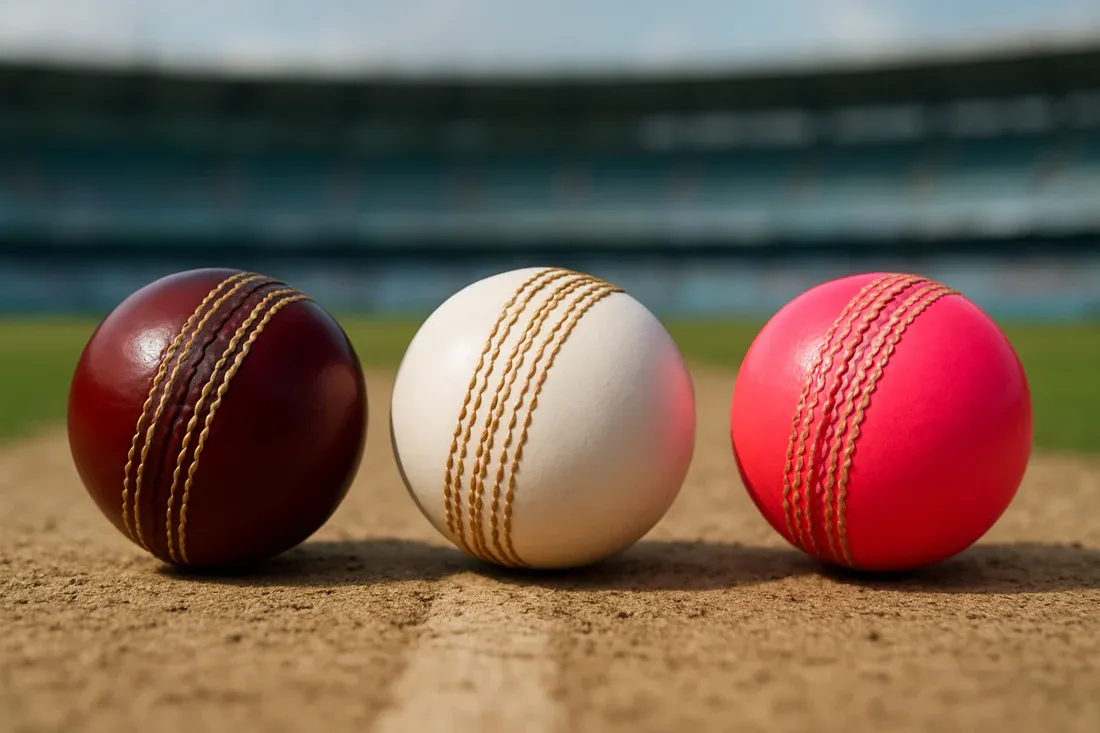
The main difference between red, white, and pink cricket balls is the format they're used in and how they behave. Red balls are for Test cricket and last 80+ overs. White balls are for ODIs and T20s but deteriorate faster. Pink balls are for day-night Tests and swing the most under lights. Here's the full breakdown.
Red Ball, The Test Cricket Standard
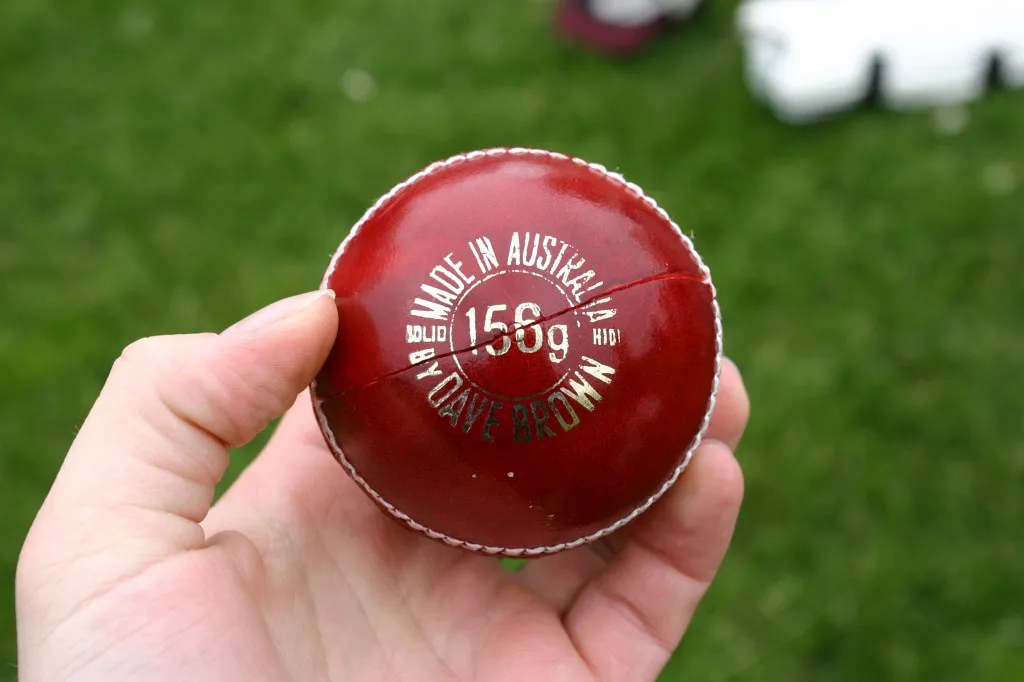
All cricket balls weigh between 155.9g and 163g regardless of colour, with a circumference of 22.4 to 22.9 cm. All three are built the same way, a cork core wrapped in twine, covered in leather, and stitched with a raised seam. The difference is in the dye, coating, and seam construction.
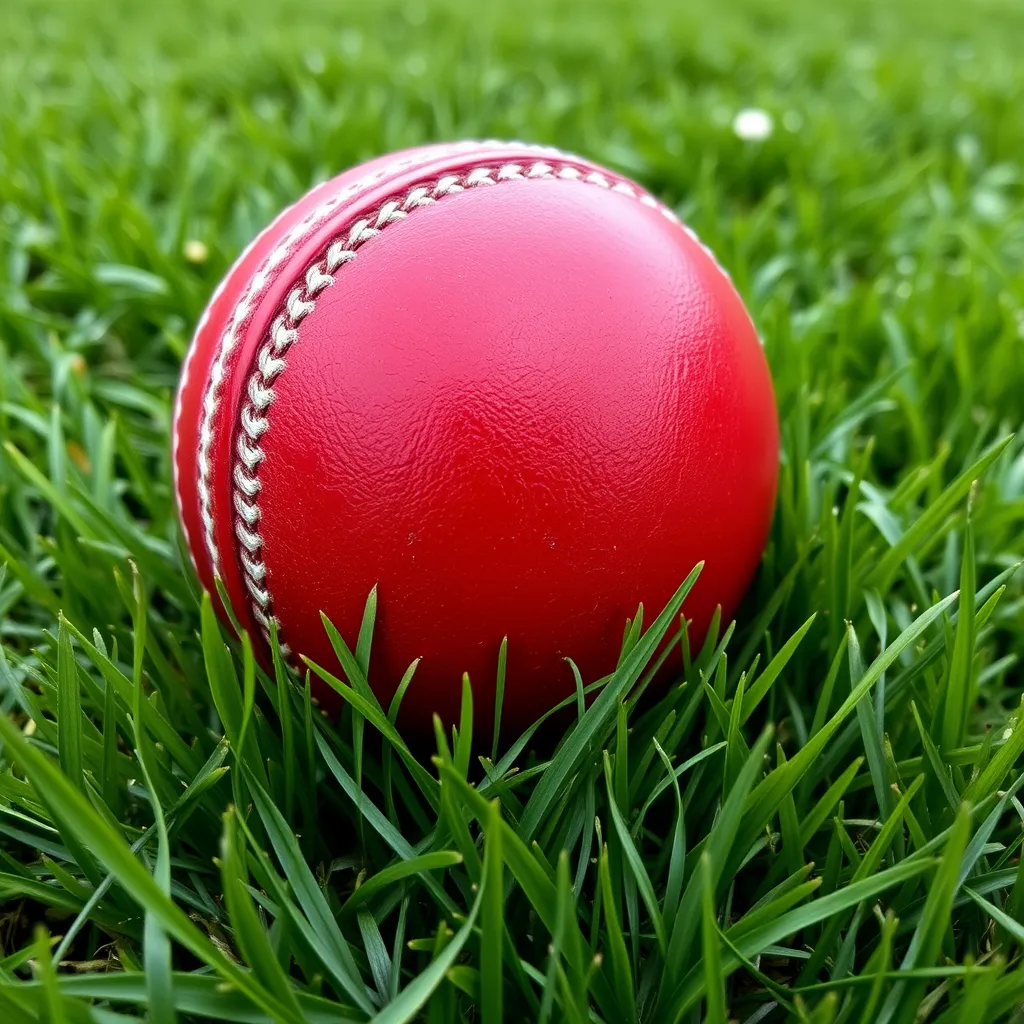
The red ball is the original cricket ball, used in Test matches and first-class cricket since the sport began. It's played during daytime on grounds with white sightscreens.
- Durability: Lasts 80+ overs, the most durable of all three
- Swing: Swings well when new, then offers reverse swing when old and roughed up
- Seam: Stitched with white thread, prominent and raised
- Visibility: Excellent during daytime against white clothing
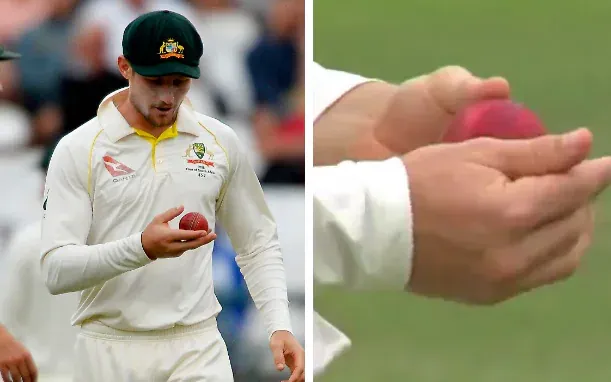
From experience: Red balls tend to go soft around 40-50 overs. That's when reverse swing becomes a real weapon, something I relied on heavily in district cricket.
White Ball, Limited-Overs Cricket
White balls are used in ODIs and T20s, especially under floodlights where a red ball would be hard to see against the dark sky.
- Durability: Deteriorates faster, usable for about 50 overs (ODIs use two new balls)
- Swing: Swings more than a red ball in the first 10 overs, then goes flat quickly
- Seam: Stitched with black thread for visibility contrast
- Coating: Has a lacquer/polyurethane coating that wears off faster, causing it to lose shape
Pink Ball, Day-Night Tests
The pink ball was introduced for day-night Test matches, first used in 2015 between Australia and New Zealand in Adelaide. It's a compromise between red and white.
- Durability: Better than white, close to red, lasts 80 overs
- Swing: Players report it swings more than both red and white balls, especially under lights
- Seam: Uses a mix of synthetic and linen thread (black stitching)
- Visibility: Designed to be visible in both daylight and under floodlights, the pink dye reflects artificial light better than red
Quick Comparison
| Feature | Red Ball | White Ball | Pink Ball |
|---|---|---|---|
| Format | Tests / First-class | ODI / T20 | Day-Night Tests |
| Durability | 80+ overs | ~50 overs | ~80 overs |
| Swing | Moderate | High (early) | Highest |
| Seam thread | White | Black | Black |
| Best visibility | Day (white clothes) | Night (coloured clothes) | Day + Night |
Why Does the Colour Matter?
Understanding the red vs white vs pink cricket ball debate goes beyond colour, it isn't just cosmetic, it determines how the ball behaves:
- Dye and coating affect how quickly the ball deteriorates and loses its seam
- Visibility affects player safety, a ball you can't see is dangerous at 140+ km/h
- Swing behaviour changes based on the lacquer and dye used
Major Manufacturers
Different regions use different brands, and each manufacturer uses slightly different leather grades and seam construction, which is why swing behaviour varies:
- Kookaburra, used in Australia, most ODIs/T20s, and pink ball Tests
- Dukes, used in England, pronounced seam that grips the surface, swings longer than Kookaburra
- SG (Sanspareils Greenlands), used in India for home Tests
Watch: Red vs White vs Pink Ball Explained
Credit: Brett Lee TV
Conclusion
Each cricket ball colour exists for a reason, red for day Tests, white for limited-overs under lights, and pink for day-night Tests. The colour affects durability, swing, and visibility. Understanding these differences helps you appreciate why bowlers and batsmen approach each format differently.
FAQs
Why don't they use a red ball in ODIs?
Red balls are hard to see under floodlights and against coloured clothing. White and pink balls provide better visibility for players and spectators.
In the red vs white vs pink cricket ball comparison, which swings the most?
The pink ball is widely reported to swing the most, especially under lights during twilight sessions.
Why do ODIs use two new white balls?
White balls deteriorate fast. Using two (one from each end) ensures consistent bounce and visibility for the full 50 overs.
Can you reverse swing a white ball?
It's very difficult. The lacquer coating wears unevenly, and the ball goes soft before it roughens enough for reverse swing.