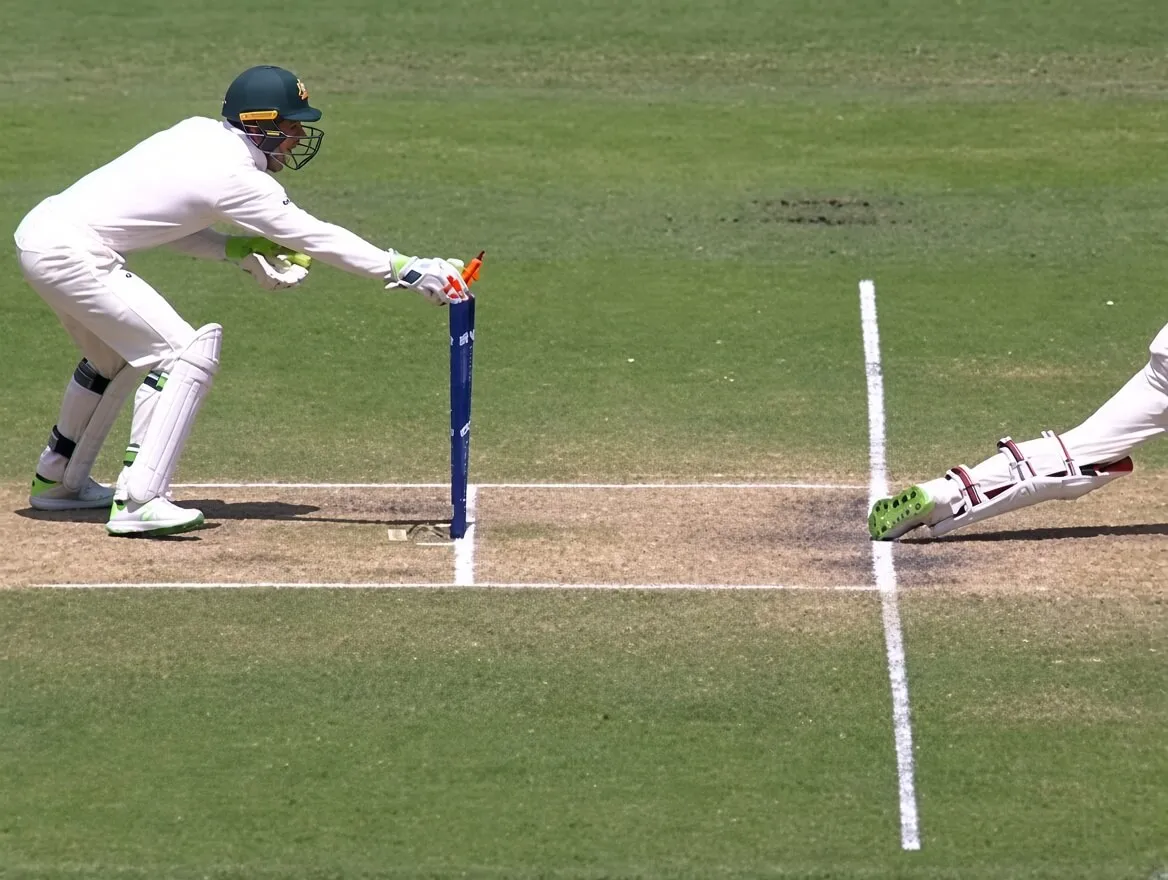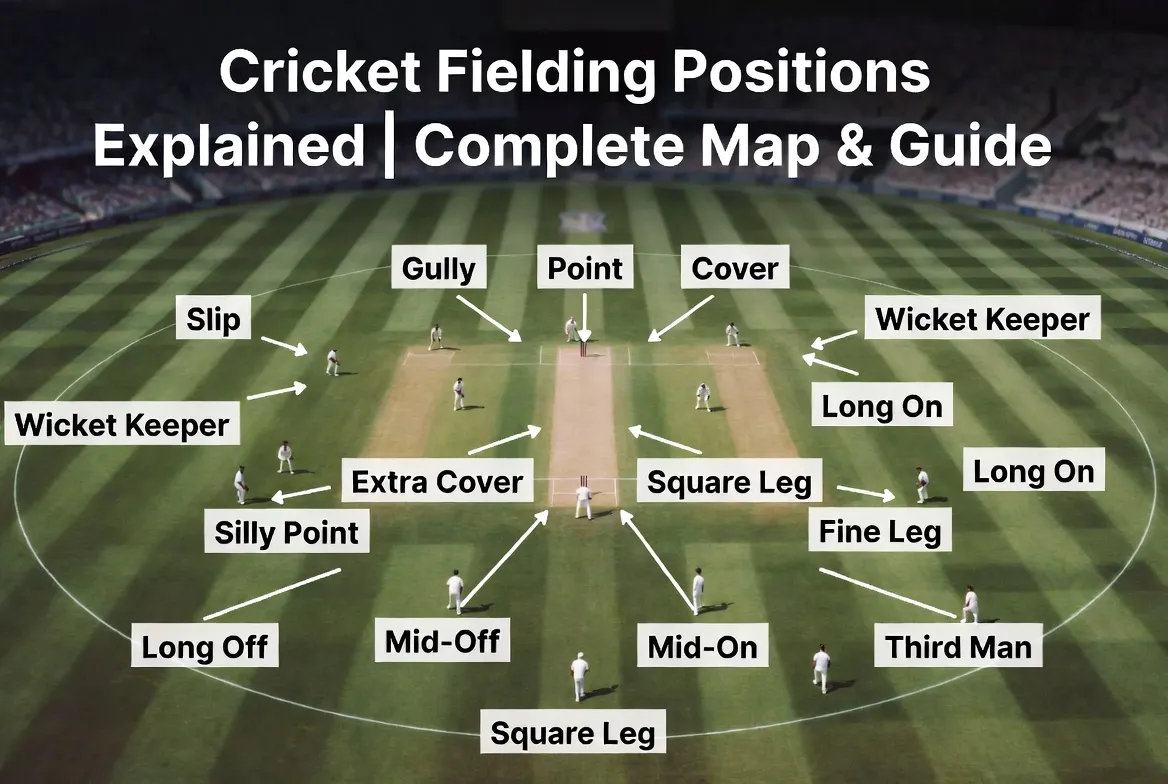
Cricket has over 35 named fielding positions, more than any other team sport. Most are clustered around the batter, the rest spread to the boundary. Position names like slip, gully, point, cover, mid-off, square leg, fine leg, and third man describe specific locations on the field, and each position has a tactical role. Captains move fielders around constantly to attack or defend based on the bowler, batter, and match situation. Here is the complete map of fielding positions with what each one does.
The Two Sides of the Field
Before naming positions, cricket divides the field into two halves based on which side of the batter the ball is on:
Off side: The side the batter faces. For a right-handed batter, the off side is to their right when standing in stance
Leg side (on side): The side behind the batter's legs. For a right-handed batter, the leg side is to their left
This division reverses for left-handed batters. Position names are based on the batter's perspective, so the same physical spot on the field is called different things depending on who is batting.
Close Catching Positions
These positions sit within 5-15 metres of the batter and are used to catch edges or short shots:
Position | Location | Role |
|---|---|---|
First slip | Off side, next to keeper | Catches edges from fast bowling |
Second slip | Off side, next to first slip | Wider edges, faster pace |
Third slip | Wider still on off side | Used against tail-enders or new ball |
Gully | Wider than slips, square of off | Cut shots, late edges |
Silly point | Very close on off side | Bat-pad catches against spin |
Silly mid-off | Close in front of batter, off side | Drives and inside edges |
Short leg | Very close on leg side | Pulls, hooks, gloved deflections |
Leg slip | Leg side, behind the bat | Glance edges |
Close fielders must wear helmets when within 7 metres of the bat. ICC safety rules mandate this for protection against full-blooded shots.
Inner Ring Positions
The inner ring is roughly 15-30 metres from the batter, inside the 30-yard circle:
Position | Side | Used For |
|---|---|---|
Point | Off side, square | Cut shots, square drives |
Cover | Off side, in front of square | Cover drives |
Extra cover | Off side, between cover and mid-off | Wider drives |
Mid-off | Off side, straight in front of bat | Straight drives, push shots |
Mid-on | Leg side, straight in front of bat | On drives, lofted shots |
Mid-wicket | Leg side, in front of square | Pulls, on drives, flicks |
Square leg | Leg side, square of stumps | Pulls, sweeps, glances |
Fine leg (inner) | Leg side, behind square | Glances, leg-side edges |
Boundary Riders (Outer Positions)
The boundary positions sit near the rope, around 60-85 metres from the batter:
Position | Side | Role |
|---|---|---|
Third man | Off side, behind square | Late cuts and edges past slips |
Deep point | Off side, square | Powerful cuts and square drives |
Deep cover | Off side, in front of square | Lofted cover drives |
Long off | Off side, straight | Straight lofted drives |
Long on | Leg side, straight | Straight lofted on drives |
Deep mid-wicket | Leg side, in front of square | Big pulls, slogs |
Deep square leg | Leg side, square | Pulls and hooks |
Deep fine leg | Leg side, behind square | Hooks, glances, edges |
Why Field Settings Change?
A captain moves fielders constantly based on:
The bowler: Fast bowlers attack with slips and gully. Spinners use silly point, short leg, deep midwicket
The batter: Sweep specialists get short leg moved up. Cut shot players see point pushed back
The phase of the innings: Powerplay overs limit how many fielders can be outside the circle
The match situation: Defensive fields stop singles. Attacking fields take wickets
This is what makes cricket captaincy so layered. The same six balls can be bowled to ten different field placements with completely different intended outcomes.
From experience: Setting fields as a captain is harder than it looks. As a bowler, I always wanted aggressive fields with extra slips. As a captain, you have to balance the bowler's appetite with the match situation. Standing at first slip myself at U16 level, I learned that catching positions look easy from the boundary but require constant focus, every ball, every over. A dropped slip catch can change the entire match.
Field Restrictions in Limited-Overs Cricket
In ODIs and T20s, captains cannot place fielders wherever they want. The 30-yard circle controls placement:
ODI Powerplay 1 (overs 1-10): Only 2 fielders allowed outside the circle
ODI Powerplay 2 (overs 11-40): Maximum 4 fielders outside
ODI Powerplay 3 (overs 41-50): Maximum 5 fielders outside
T20 powerplay (overs 1-6): Maximum 2 fielders outside
T20 non-powerplay: Maximum 5 fielders outside
This forces attacking fields early and allows defensive setups at the death. Test cricket has no restrictions, so captains can use 7 slips and a gully if the situation calls for it.
Common Field Settings by Bowler Type
Fast Bowler (New Ball)
Wicketkeeper, first slip, second slip, gully, point, cover, mid-off, mid-on, square leg, fine leg. Attacking field hunting for edges.
Spinner
Wicketkeeper, slip, silly point, point, mid-off, mid-on, mid-wicket, square leg, deep mid-wicket. Mixes close catchers with run-stoppers.
Death Bowling (T20/ODI)
Wicketkeeper, point, deep cover, long off, long on, deep mid-wicket, deep square leg, deep fine leg, third man. All boundary protection, looking to bowl yorkers and slower balls.
The Wicket Keeper
The wicketkeeper stands behind the stumps and is the only fielder who wears specialist gloves and pads. Position varies with the bowler:
Standing back: Several metres behind the stumps for fast bowlers
Standing up: Right behind the stumps for spinners and slower bowlers, to attempt stumpings
The keeper's gloves and pads are not the same as batting equipment. Wicket keeping pads are lighter and more flexible to allow long squat sessions.
Conclusion
Cricket's 35+ fielding positions exist because the game has 360 degrees of attack. Every shot a batter plays goes somewhere, so every patch of the field needs a name and a tactical role. Slip, gully, point, cover, mid-off, mid-wicket, square leg, fine leg, and third man are the foundations. Captains change fields constantly based on bowler, batter, and match situation. Understanding positions makes watching cricket far more enjoyable, you start to see the chess match between captain and batter on every ball. For how field restrictions vary across formats, our guide on cricket formats covers Test, ODI, and T20 differences, and to see how positions tie into rules like LBW, see our dedicated rule guides.
Credit: Cricket Cordon
FAQs
How many fielding positions are there in cricket?
Over 35 named positions, though no team uses all of them at once. A standard fielding side consists of 11 players, including the bowler and wicketkeeper.
What is the difference between off side and leg side?
Off side is the side the batter faces (right side for a right-hander). Leg side is behind the batter's legs (left side for a right-hander). It reverses for left-handed batters.
What is a slip in cricket?
A close catching position next to the wicketkeeper on the off side. Multiple slips can be placed (first, second, third) to catch edges from fast bowling.
What is the difference between mid-on and long on?
Mid-on is the inner ring position straight in front of the batter on the leg side. Long on is the same line but at the boundary.