Learning to fit a cricket helmet correctly could save your life. A helmet that doesn't fit properly can shift on impact, obstruct your vision, or fail to protect your face and jaw. Every year, players get injured because they're wearing helmets that are too loose or too tight. Whether you're buying your first helmet or replacing an old one, getting the right size and fit is non-negotiable. Here's how to measure, check, and adjust your helmet for maximum protection.
How to Measure Your Head
- Use a flexible measuring tape
- Place it 1-2 finger widths above your eyebrows
- Wrap it around the widest part of the back of your head
- Note the measurement in centimeters
Cricket Helmet Size Chart
| Size | Head Circumference |
|---|---|
| Small | 54-56 cm |
| Medium | 56-58 cm |
| Large | 58-60 cm |
| X-Large | 60-63 cm |
Note: Sizes vary slightly between brands. Always check the manufacturer's chart.
How to Check if Your Cricket Helmet Fits Properly
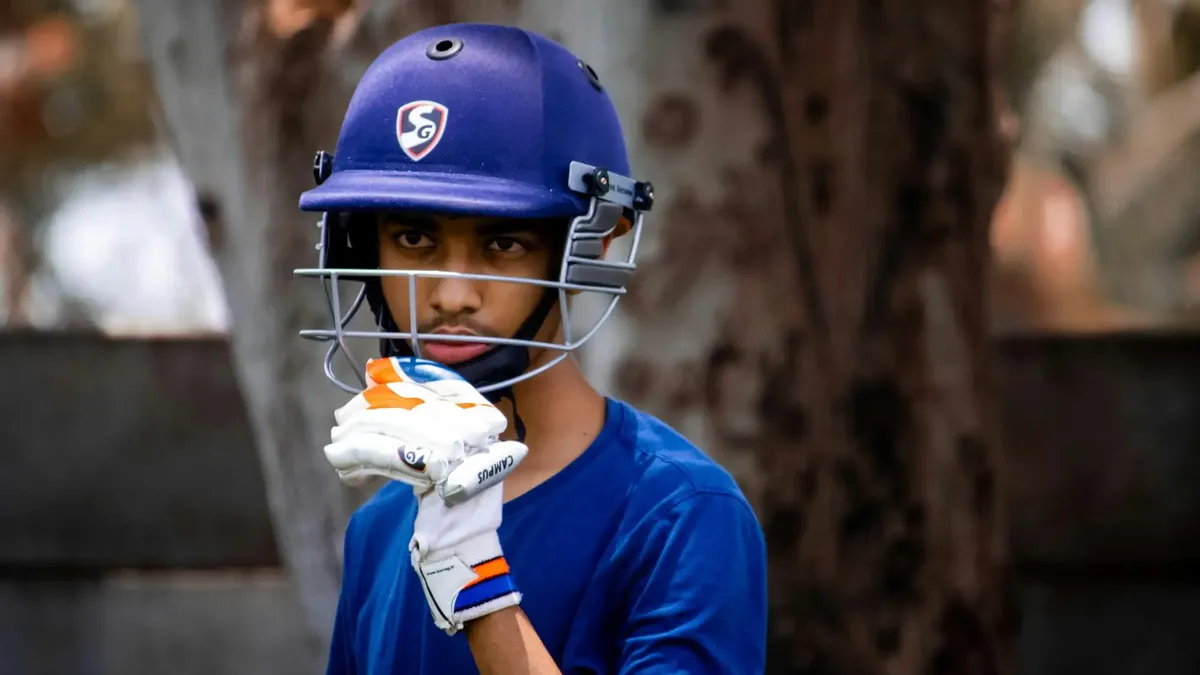
- Slide it on, it should feel snug, not loose. If it slides on easily, it's too big
- Shake your head, the helmet should not move or shift
- Check the grill gap, there should be a two-finger gap between the peak and the grill for clear vision
- Grill coverage, the grill must cover your entire face, chin, and jaw line
- Padding contact, internal padding should press evenly against your forehead, temples, and back of head
From experience: I've been hit on the grill by 140 km/h deliveries. A loose helmet shifts on impact and the grill can press into your face. A snug helmet absorbs the blow. Don't compromise on fit.
Chin Strap Adjustment
What to Look for in a Good Helmet
The outer shell should be made of high-impact polypropylene or fiberglass. The faceguard (grill) is either steel or titanium, titanium is lighter but more expensive. Look for models with replaceable padding so the fit stays snug over time.
Fasten the chin strap so it's firm but not uncomfortable. You should be able to fit one finger between the strap and your chin. A loose strap means the helmet can fly off on impact.
When to Replace Your Cricket Helmet
- After any significant impact, the internal structure may be compromised even if it looks fine
- If the padding has compressed and the helmet feels loose
- Every 3-5 years regardless, store your helmet in a cool, dry place away from direct sunlight, which degrades the shell, helmets are part of your essential cricket protective gear checklist
- If it no longer meets current safety standards (look for BS 7928:2013 or equivalent)
Safety Standards to Look For
- BS 7928:2013, British Standard (most common)
- AS/NZS 4499.1, Australian/New Zealand Standard
- ICC now mandates certified helmets for all international cricket
Watch: How to Fit a Cricket Helmet
Credit: Gray-Nicolls
Conclusion
A properly fitted cricket helmet is non-negotiable safety equipment. Measure your head, check the snug fit, ensure the grill covers your face completely, and replace it after any significant impact. No amount of skill protects you from a bouncer, your helmet does.
FAQs
Can I wear a helmet that's slightly too big with extra padding?
Not recommended. Extra padding compresses over time and the helmet will become loose again. Always buy the correct size.
Do I need a stem guard (neck protector)?
Yes, especially for facing pace bowling. After the Philip Hughes incident in 2014, neck guards are now standard and strongly recommended at all levels.
Should juniors always wear helmets?
Yes, without exception. When buying children's cricket helmets, prioritise certified models that fit snugly. Most cricket associations mandate helmets for all junior players when batting and keeping up to the stumps.