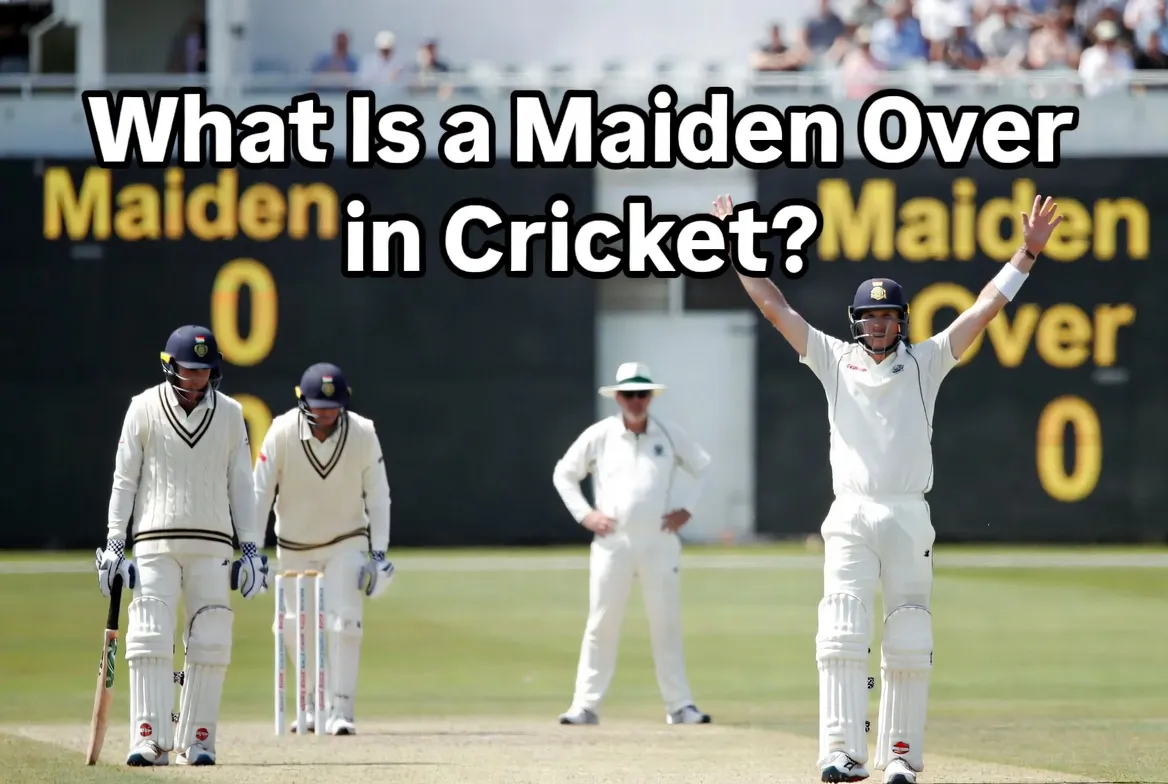
A maiden over in cricket is an over in which no runs are scored off the bat or as wides/no balls. The bowler delivers all six legal deliveries without the batting side adding a single run to the team total. Maidens are recorded as a separate column in cricket scorecards and are a key measure of a bowler's accuracy and ability to build pressure. While byes and leg byes do not count against the maiden, any run off the bat or extras from the bowler breaks it. Here is exactly how maiden overs work, their value across formats, and the record holders.
What Counts as a Maiden?
To bowl a maiden over, all six legal deliveries must result in:
Dot balls: Batter does not score off the delivery
Byes or leg byes: These are extras, not runs against the bowler
Wickets: Wickets do not break a maiden as long as no runs are scored on the delivery
What breaks a maiden:
Any run scored off the bat
Wides: Counted against the bowler, adds a run, breaks maiden
No balls: Same, counts against the bowler
Boundaries: Obviously break maidens immediately
A bowler can take multiple wickets in a maiden over. A famous example is a "wicket maiden", a maiden over that includes one or more dismissals.
Why Maidens Matter
Maidens are not just statistical curiosities. They serve real tactical purposes:
Build scoreboard pressure: A team chasing or building an innings cannot afford too many maidens
Restrict run rate: Six dot balls equals 0 runs added to the over rate
Force batter mistakes: Frustrated batters often play attacking shots after a maiden, leading to wickets
Bowler confidence: A maiden over gives a bowler control and rhythm
In Test cricket, a bowler maintaining a strong maiden rate over a long session can change the entire feel of the match. Even without taking wickets, sustained pressure builds.
Maidens Across Cricket Formats
Format | Maidens Per Innings (Approx) | Strategic Importance |
|---|---|---|
Test cricket | 20-50+ across both sides | Very important, builds pressure over hours |
ODI | 5-15 | Important, restricts run rate |
T20 | 0-2 | Rare, but a maiden in T20 is huge |
In T20 cricket, a maiden over is so rare that it is often a match-defining event. T20 innings typically score at 7-10 runs per over, so a 0-run over represents a 70-100% reduction in expected scoring.
Famous Maiden Over Records
Most Maiden Overs in Test Career
The record for most maiden overs in Test cricket history belongs to England's Stuart Broad who bowled over 1,700 maiden overs in his Test career. Other record holders include:
Glenn McGrath (Australia): Over 1,500 Test maidens
James Anderson (England): The leading active bowler in Test maidens
Shaun Pollock (South Africa): One of the most economical bowlers ever, with high maiden rates
The First Over of a Test Match
Several bowlers have started Test matches with maiden overs. The most famous opening over maiden in modern cricket was Stuart Broad's first over to David Warner at Trent Bridge in 2015. Broad took multiple wickets in subsequent overs and finished with 8/15, the most destructive Test spell of the modern era.
The Wicket Maiden Hat-Trick
A wicket maiden is a maiden over with at least one dismissal. A wicket maiden hat-trick (three wickets in three balls of a maiden over) is one of cricket's rarest achievements. Hugh Trumble (Australia) and Jimmy Matthews (Australia) both achieved this in Tests, but it has happened only a handful of times in history.
From experience: As a bowler at club and U19 level, bowling a maiden feels different from any other over. The first three dots build rhythm. By the fourth, the batter starts shuffling around. By the sixth, both sides know the over mattered, even with zero runs scored. The accumulated pressure from consecutive maidens is what often produces wickets in the very next over. Maidens win matches even when they look like nothing happened.
How Maidens Are Recorded in Scorecards?
Every cricket scorecard tracks a bowler's maiden overs in a dedicated column. A typical bowling figures entry might read:
S Broad: 18-7-32-3
This breaks down as:
18: Total overs bowled
7: Maiden overs bowled (with 7 of those 18 producing zero runs)
32: Runs conceded
3: Wickets taken
A bowler with a high maiden-to-overs ratio is considered economical and is often deployed during pressure phases of the match.
Why You Rarely See Maidens in T20
T20 cricket's structure makes maidens unusual:
20-over innings means each ball is precious, batters cannot afford dot balls in sequence
Powerplay rules force attacking fields, making dot balls riskier for fielders
Batter strike rates of 130-160+ mean they actively look to score every ball
Free hits after no balls mean bowlers cannot afford illegal deliveries
When a T20 maiden does happen, it is usually due to disciplined bowling combined with a batter trying not to lose their wicket. It often happens in the first over to the new batter.
How to Bowl More Maidens
For club and junior bowlers looking to improve their maiden rate:
Bowl wicket-to-wicket: Straight lines force batters to play, reducing leave options
Mix up pace: Even small variations make consistent timing harder
Tight lengths: Avoid bouncers and full tosses that offer scoring opportunities
Bowl to your field: A good fielder at point lets you bowl wider lines safely
Stay accurate under pressure: Most maiden chances are lost on the fifth or sixth ball when bowlers ease up
Conclusion
A maiden over is six balls without a run scored, and it remains one of cricket's most respected achievements for bowlers. In Tests, maidens build the long-form pressure that produces collapses. In ODIs, they restrict run rates in critical phases. In T20s, a maiden is often a match-winning event. Whether you are watching or playing, the maiden over column on the scorecard tells you who is dictating the contest. For the full structure of overs across formats, see our guide on how many overs in cricket, and to understand how maidens factor into match duration and over rates, our timing guide covers it.
FAQs
What is a maiden over in cricket?
An over where no runs are scored off the bat or as wides/no balls. Byes and leg byes do not break a maiden.
Can a maiden over include a wicket?
Yes. A maiden with at least one dismissal is called a "wicket maiden". The bowler still gets credit for the maiden as long as no runs are scored.
What is the difference between a maiden and a dot ball?
A dot ball is a single delivery with no run. A maiden over is six consecutive dot balls (or dot balls plus wickets) in the same over.
Why are maidens rare in T20 cricket?
T20 batters score at 7-10 runs per over on average. Six dot balls in a row requires exceptional bowling against batters whose role is to attack every delivery.