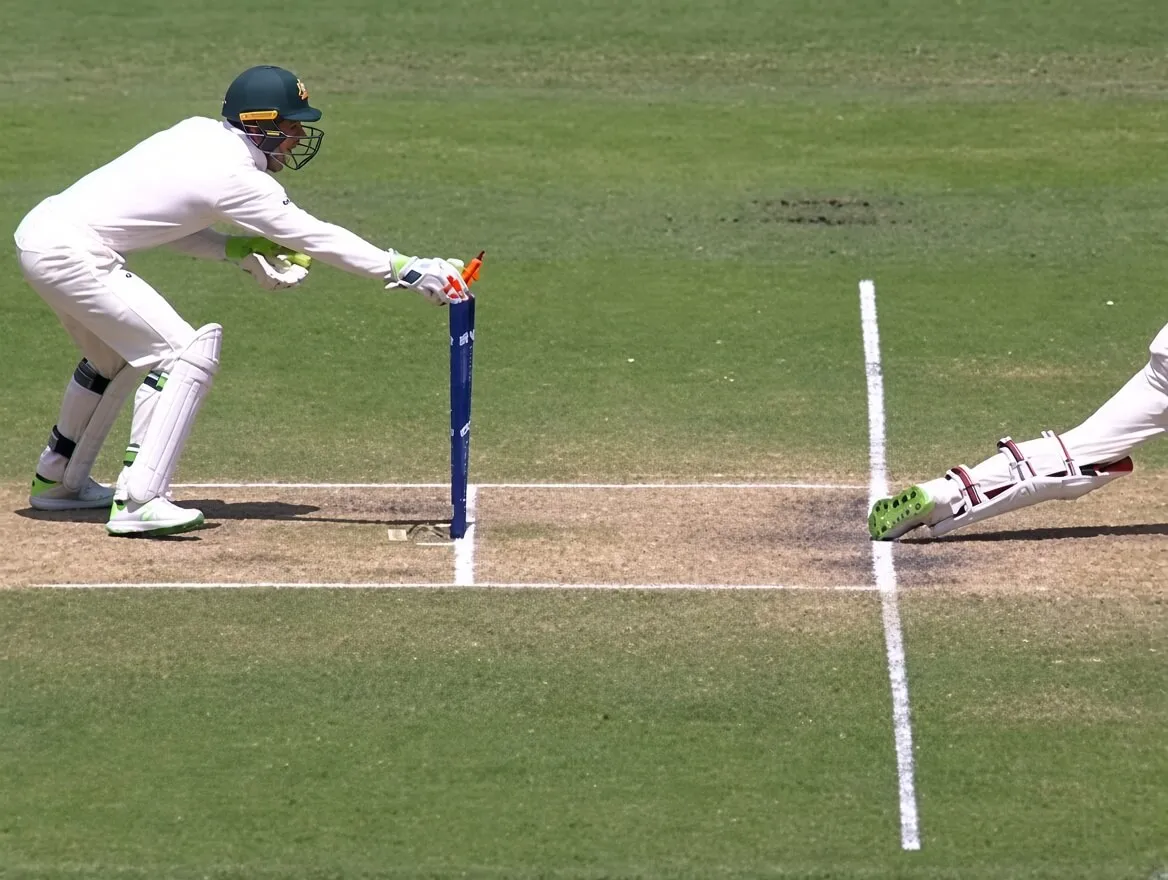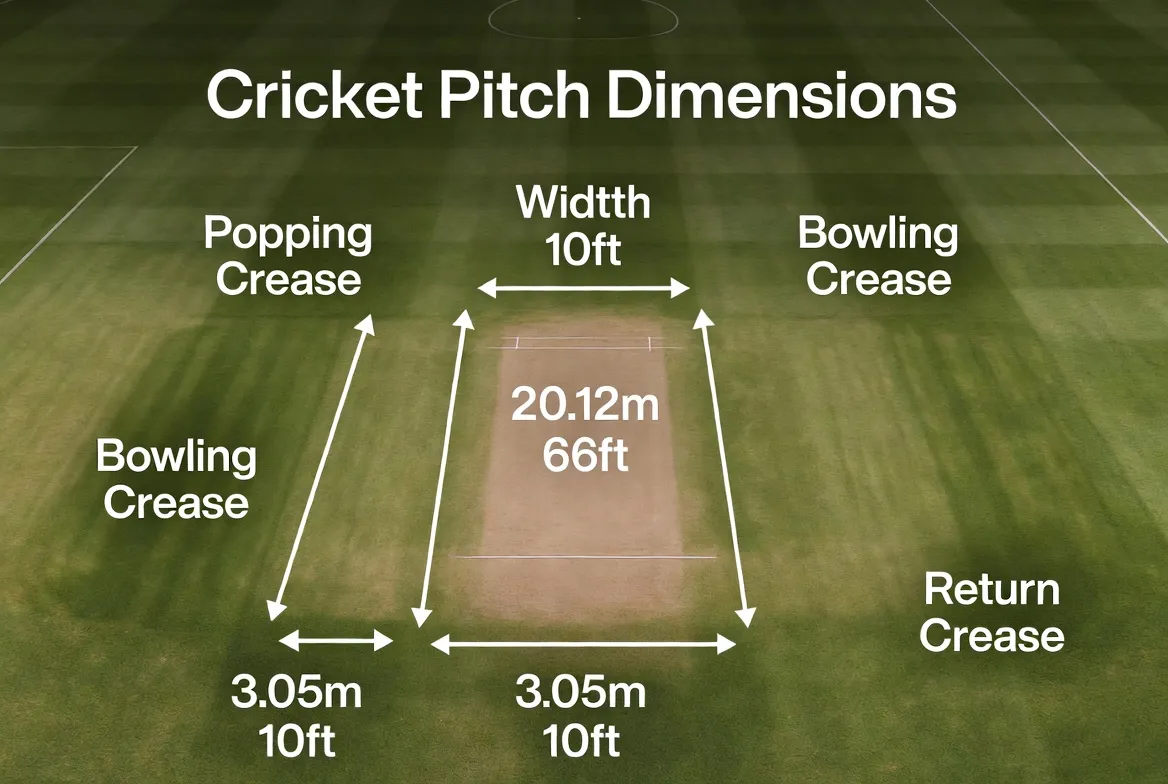
A cricket pitch is 22 yards (20.12 metres) long and 10 feet (3.05 metres) wide. These exact dimensions have been standard since the Laws of Cricket were formalised in 1744, making the cricket pitch one of the oldest standardised playing surfaces in any sport. The pitch is the strip of ground between the two sets of stumps where bowling and batting take place, surrounded by the larger oval cricket field. Here is the complete breakdown of pitch dimensions, the crease markings, and why the 22-yard length matters for how cricket is played.
Cricket Pitch Dimensions at a Glance
Measurement | Imperial | Metric |
|---|---|---|
Pitch length (stump to stump) | 22 yards | 20.12 m |
Pitch width | 10 feet | 3.05 m |
Stumps height | 28 inches | 71.1 cm |
Stumps width (3 stumps total) | 9 inches | 22.86 cm |
Bail length | 4.31 inches | 10.95 cm |
Popping crease from stumps | 4 feet | 1.22 m |
Return crease from middle stump | 4.4 feet | 1.32 m |
Why 22 Yards?
The 22-yard pitch length is one chain, an old English unit of measurement used in surveying since the 1620s. When cricket's first laws were written in the 18th century, distances were measured using surveyor's chains. The 22-yard standard stuck because it produced a fair contest between bat and ball, long enough to give bowlers time to extract movement, short enough to keep batters in play.
The same dimension still defines a cricket pitch worldwide, from international Tests to club cricket. For comparison, this is roughly the length of a tennis court (23.77 metres including back areas), or about twice the length of a bowling lane.
The Crease Markings
The pitch has three white painted lines at each end, each with a specific role in the rules of cricket:
1. The Bowling Crease
The line that runs through the centre of the stumps, extending 4 feet 4 inches on each side. This is the line stumps are placed on. It is also the reference line for measuring no balls and crease violations.
2. The Popping Crease (Batting Crease)
The most important line on the pitch. Drawn 4 feet (1.22 m) in front of the bowling crease. The popping crease is the line a batter must reach with the bat or part of the body to be safe from a run out, stumping, or dismissal. For a bowler, the front foot must land behind the popping crease to bowl a legal delivery, or it counts as a no ball.
3. The Return Crease
Two parallel lines running 4 feet 4 inches from the middle stump on each side, perpendicular to the bowling crease. These mark the outer limits of where a bowler's back foot can land during delivery. If the back foot lands beyond the return crease, it is also a no ball.
Together, these creases create a rectangular box at each end of the pitch where bowlers must land their feet legally and where batters are considered "in their crease."
The Stumps and Bails
At each end of the pitch stand the wickets, made up of:
3 stumps: vertical wooden poles, 28 inches high, set 9 inches wide in total
2 bails: small wooden pieces resting on top of the stumps, each 4.31 inches long
For a batter to be bowled out, the ball must dislodge at least one bail completely from the stumps. If the bails are knocked but stay in their grooves, the batter is not out. This rule exists because in windy conditions, lighter touches could dislodge bails unfairly.
How the Pitch Affects Play?
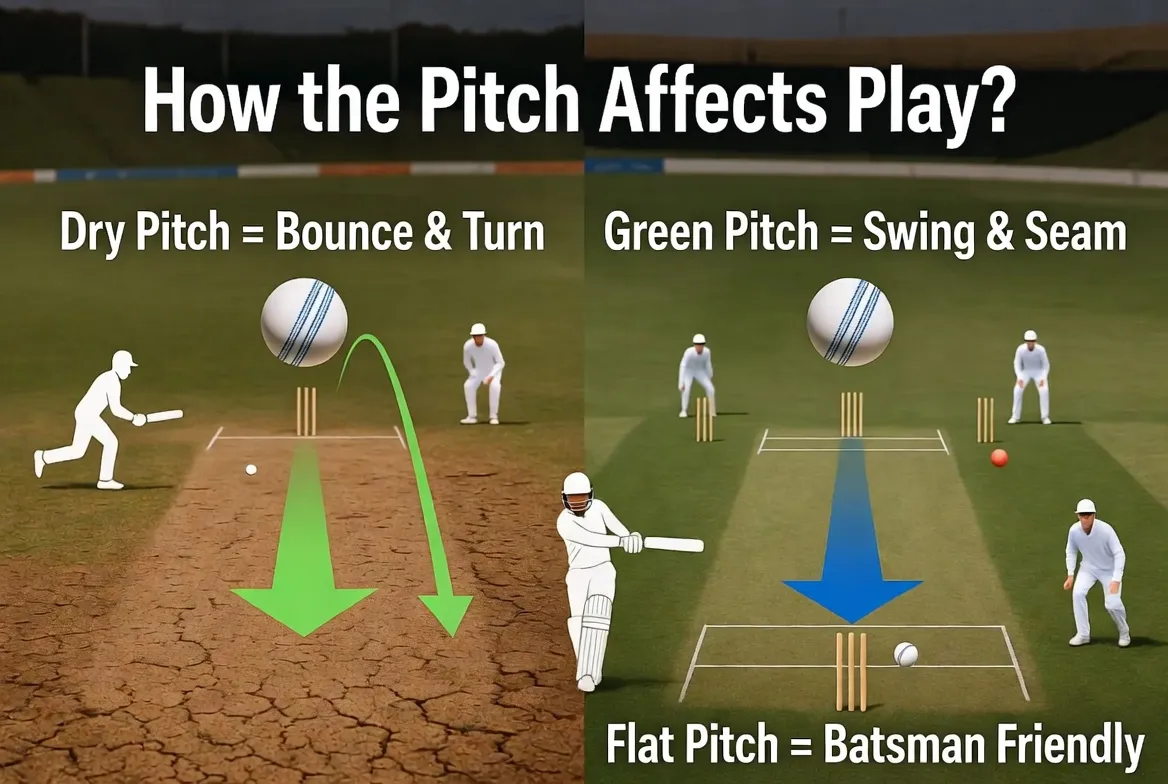
Pitch dimensions are constant, but the surface itself changes how cricket plays out:
Hard, flat pitches: Favour batters. Australia and India often produce these in Tests
Green, grassy pitches: Help fast bowlers with seam movement. Common in England and New Zealand
Dusty, dry pitches: Favour spinners as the surface breaks up. Common in subcontinental Tests after day 2
Bouncy pitches: Help fast bowlers extract extra height. Common in South Africa and Australia
The 22-yard length means a fast bowler has roughly 0.4-0.5 seconds from delivery to the ball reaching the batter at 145 km/h. The batter has the same brief window to read the line, length, and shape of the delivery. This balance makes cricket the contest it is.
From experience: Most club and junior pitches are technically the right length, but the surface quality varies wildly. At U16 level, I played on pitches ranging from immaculate turf to uneven matting laid over rough ground. The 22 yards stays the same, but a low bouncy pitch versus a slow turner is essentially two different sports. Understanding the pitch is half of cricket's strategy.
Pitch Length for Junior Cricket
While professional cricket always uses 22 yards, junior cricket reduces pitch length to match player size and bowling pace:
Age Group | Pitch Length |
|---|---|
Under 9 | 16 yards (14.6 m) |
Under 11 | 18 yards (16.5 m) |
Under 13 | 20 yards (18.3 m) |
Under 15 and above | 22 yards (full pitch) |
These shorter junior pitches help young bowlers reach the batter at proper pace and let young batters develop technique on a pitch suited to their size. If you are setting up a backyard cricket practice area, you can adjust pitch length to match the players using it.
The Pitch in Indoor and Backyard Cricket
Backyard and indoor cricket use shorter pitches by necessity. Common informal pitch lengths:
Indoor cricket: 12-15 metres, with rebound nets in place of fielders
Backyard cricket: 8-15 metres depending on space and age of players
Tape ball street cricket: Varies widely, often 12-18 metres
The shorter pitch keeps the game flowing in confined spaces while still preserving cricket's essential structure of bowler delivering to batter.
Pitch Preparation
Test and first-class pitches are prepared by groundsmen over several days:
Rolling the surface to compact the soil
Watering to manage moisture content
Cutting the grass to a specific height
Marking the creases with paint or chalk
The exact preparation determines how the pitch will play. A pitch that has been watered and rolled flat will be batter-friendly. One left with more grass and moisture will help fast bowlers. Groundsman decisions can effectively swing matches before a ball is bowled.
Conclusion
The cricket pitch is 22 yards long, 10 feet wide, and structured around three crease lines that govern legal play. These dimensions have been standard for nearly three centuries and form the foundation of cricket's contest between bat and ball. Whether you are watching a Test match or playing in your backyard, the same basic geometry applies. To see how pitch length affects bowling and over rates, see our guide on how many overs in cricket, and for the wider context of how the pitch fits into cricket's match structure, our cricket formats explained guide covers Test, ODI, and T20 differences.
FAQs
How long is a cricket pitch?
22 yards (20.12 metres) from stump to stump. This has been the standard length since the Laws of Cricket were formalised in 1744.
How wide is a cricket pitch?
10 feet (3.05 metres) wide. The pitch itself, not the entire field, which is much larger.
What is the popping crease?
The line drawn 4 feet in front of the stumps at each end of the pitch. Batters must reach this line with bat or body to be safe from run outs and stumpings. Bowlers must land their front foot behind it for a legal delivery.
Why is a cricket pitch 22 yards?
22 yards equals one chain, an old English surveying unit. When cricket's first laws were written in the 18th century, distances were measured using surveyor's chains, and the standard stuck.