Cricket scoring is built around runs and wickets. The batting team scores runs by hitting the ball and running between the wickets, hitting boundaries, or accumulating extras from bowler errors. The fielding team takes wickets to limit the score. The team with more runs at the end of their innings wins, with format-specific rules for ties and reduced-overs matches. Here is the full breakdown of how cricket's scoring system actually works.
The Basic Building Blocks
Every cricket score is built from these elements:
Element | Value | How Scored |
|---|---|---|
Run | 1 | Both batters complete a run between wickets |
Two | 2 | Batters complete two runs |
Three | 3 | Batters complete three runs (rare) |
Boundary (Four) | 4 | Ball reaches or crosses boundary along the ground |
Six | 6 | Ball clears the boundary on the full |
Wide | 1+ (extra) | Bowler delivers out of batter's reach |
No ball | 1+ (extra) | Illegal delivery (see no ball guide) |
Bye | 1+ (extra) | Runs scored when ball misses bat and pad |
Leg bye | 1+ (extra) | ?Runs scored after ball hits batter's body (not bat) |
How Runs Are Scored?
Running Between the Wickets
After a batter hits the ball, both batters can run from one end of the pitch to the other. Each completed run (with at least the bat or part of the body grounded behind the popping crease) counts as 1 run. Multiple runs can be taken on the same ball as long as the batters can keep running before the ball reaches the wicket.
Boundaries: 4s and 6s
Four: The ball reaches the boundary rope after touching the ground. Worth 4 runs
Six: The ball clears the boundary on the full (without bouncing). Worth 6 runs
Boundary fielders must keep both feet inside the rope when fielding. If a foot touches the rope, it is automatically a boundary
Extras
Runs added to the team total without coming off the bat:
Wide: Bowler delivers too far from the batter to reach. 1 run plus the ball must be re-bowled
No ball: Illegal delivery. 1 run plus a re-bowl, with a free hit in limited-overs cricket
Bye: Ball misses bat and pad, batters run. Counted as extras, not against the bowler
Leg bye: Ball hits the batter's body (not bat), batters run. Extras, not against the bowler
Penalty runs: Awarded for unfair play (5 runs)
Reading a Cricket Scorecard
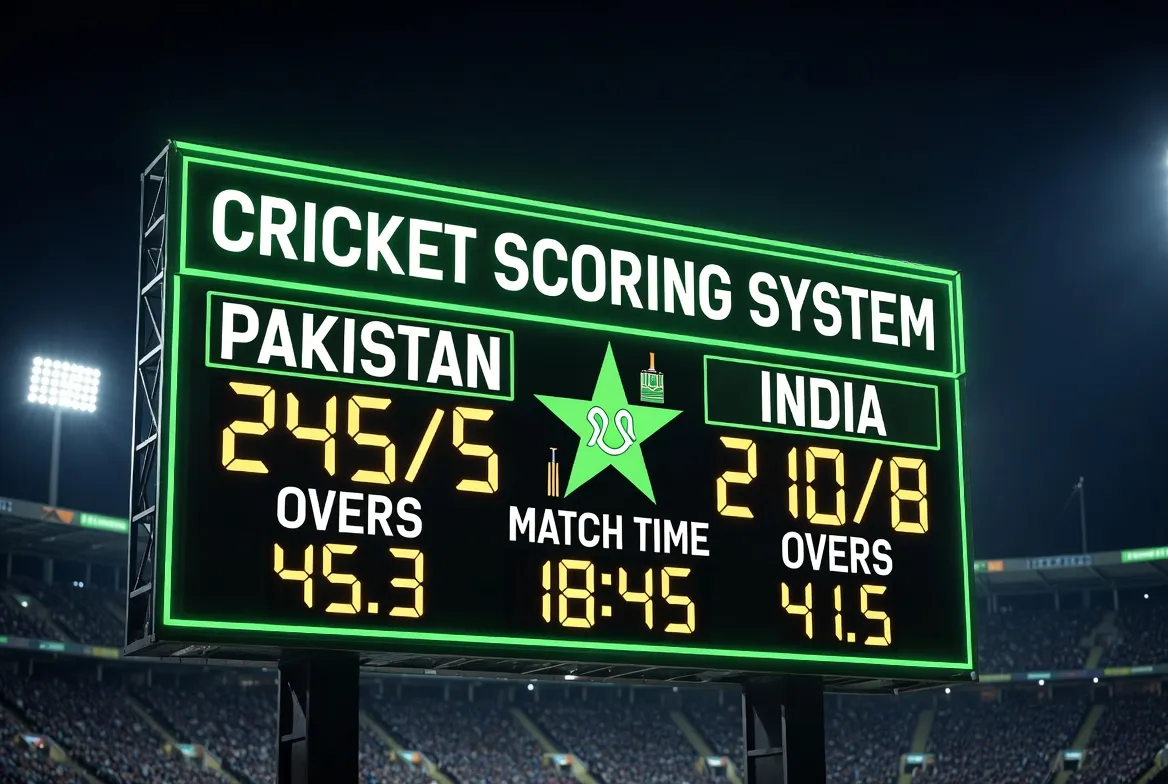
A typical scoreboard shows:
Total / Wickets: e.g., 250/4 (250 runs scored, 4 wickets lost)
Overs: How many overs have been bowled
Run Rate (RR): Runs per over so far
Required Run Rate (RRR): Runs per over needed to win (chasing only)
Partnership: Runs scored by the current pair of batters together
Run Rate Explained
Run rate is the average runs scored per over. Calculation:
Run Rate = Total Runs ÷ Overs Faced
If a team has scored 200 in 40 overs, their run rate is 5.00
In Tests, run rates of 3-4 are common
In ODIs, run rates of 5-6 are competitive
In T20s, run rates of 7-10 are typical
Run rate is critical when chasing because the chasing team must match or exceed the required rate to win. Falling behind the rate is a strong indicator of likely defeat.
Partnership Scoring
A partnership is the runs scored together by the two batters at the crease. When one batter is dismissed, the partnership ends and a new one begins with the next batter. Partnerships are tracked as a key statistic because:
Big partnerships are usually match-defining
The highest partnership in cricket history is 624 runs by Sangakkara and Jayawardene in 2006
In limited-overs cricket, fast partnerships are crucial during the middle overs
How Format Affects Scoring?
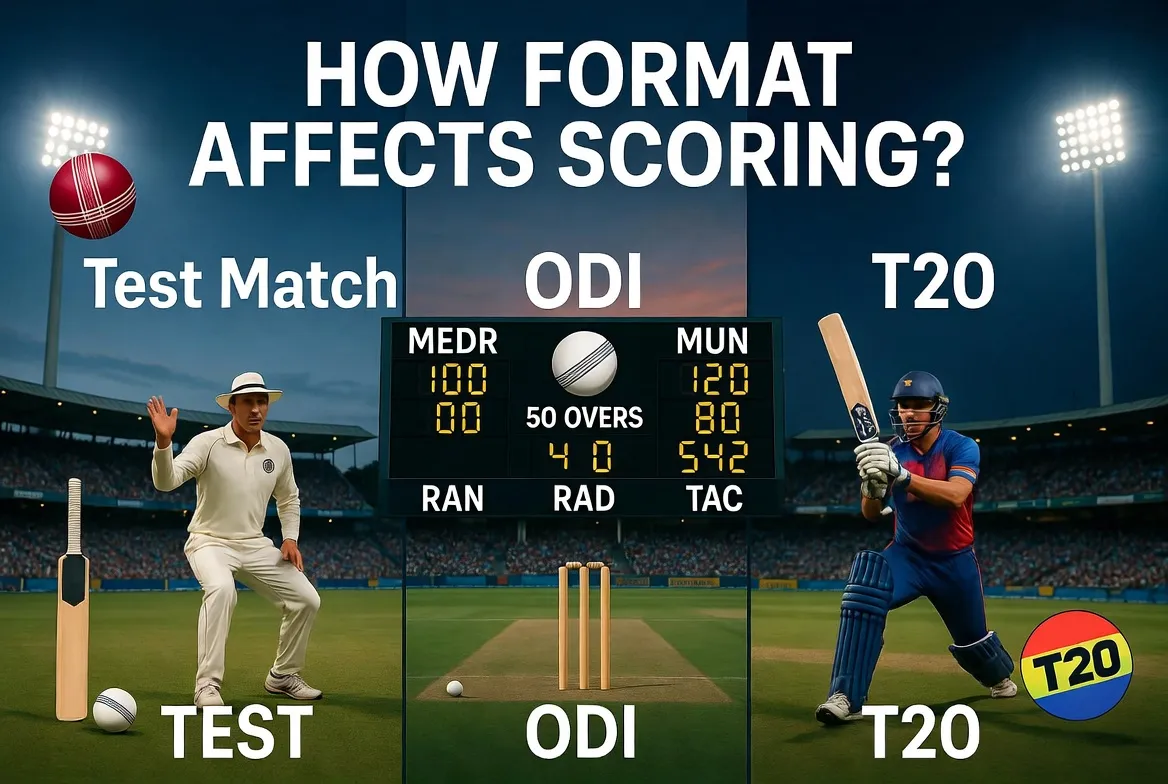
The same scoring rules apply across formats, but the strategy differs:
Format | Typical Score | Run Rate | Strategy |
|---|---|---|---|
Test | Up to 600+ per innings | 3-4 | Build innings, occupy crease |
ODI | 250-350 | 5-7 | Pace innings, accelerate at death |
T20 | 150-200 | 7-10 | Attack from ball one |
For the full breakdown of how scoring strategy differs across formats, see our cricket formats explained guide.
From experience: In multi-day cricket, the scorecard tells a different story than in T20. A 250/3 in a Test after a full day is a strong position. The same score in an ODI in 35 overs is dominant. In T20, that score in 15 overs would be exceptional. Reading the scoreboard means understanding the format you are watching, not just the numbers.
Match Result Scenarios
Win by runs: Team batting second falls short of the target
Win by wickets: Team batting second reaches the target with wickets in hand
Tie: Both teams have the exact same score after both innings
Draw: Tests only, time runs out before a result
No result: Match abandoned due to weather and reduced overs cannot give a result. ODIs and T20s use the DLS method to recalculate targets in rain-affected matches
Conclusion
Cricket scoring looks complex but breaks down into a small set of building blocks: runs from running, boundaries, and extras, combined with wickets that limit the batting side. Once you understand run rates, partnerships, and the difference between extras and runs off the bat, you can read any cricket scoreboard. To see how scoring rules combine with the dismissal system, our guide on all 11 ways to get out in cricket covers how wickets fall, and the no ball guide explains exactly how illegal deliveries affect the score.
FAQs
How does cricket scoring work?
Runs are scored by running between wickets, hitting boundaries (4s and 6s), or earning extras from bowler errors. The team with more runs after their innings wins.
What is the difference between a four and a six?
Four: Ball reaches the boundary along the ground. Six: Ball clears the boundary on the full (without bouncing).
What are extras in cricket?
Runs added to the score that do not come off the bat. Includes wides, no balls, byes, leg byes, and penalty runs.
What is a good run rate in cricket?
Depends on format. 3-4 per over in Tests, 5-7 in ODIs, 7-10 in T20s are typical competitive run rates.