There are 11 ways a batter can be dismissed in cricket. Most fans know the common ones, bowled, caught, run out, stumped, and LBW. But cricket's full list of dismissals includes rare modes like obstructing the field, hit wicket, hit the ball twice, timed out, retired out, and the disputed Mankad (now called run out at the non-striker's end). Understanding all 11 dismissal types helps you read the game properly and know exactly what counts as out under cricket's laws. Here is the complete breakdown.
The 11 Methods of Dismissal
# | Dismissal | Frequency | Counts Toward Bowler? |
|---|---|---|---|
1 | Bowled | Very common | Yes |
2 | Caught | Very common | Yes |
3 | LBW (Leg Before Wicket) | Common | Yes |
4 | Run Out | Common | No |
5 | Stumped | Common | Yes |
6 | Hit Wicket | Rare | Yes |
7 | Hit the Ball Twice | Very rare | No |
8 | Obstructing the Field | Very rare | No |
9 | Timed Out | Extremely rare | No |
10 | Retired Out | Extremely rare | No |
11 | Run Out (Non-Striker, Mankad) | Rare | No |
1. Bowled
The most direct dismissal. The bowler delivers the ball, it passes the bat, and strikes the stumps, dislodging at least one bail. The batter is out regardless of whether the ball touched the bat, gloves, or pads first. Bowled is the only dismissal where there is rarely any dispute, the stumps speak for themselves.
2. Caught
The batter hits the ball with their bat or gloved hand holding the bat, and a fielder catches the ball before it hits the ground. The catch must be cleanly held, and the fielder must have full control while their feet are inside the boundary. This is the most common form of dismissal in modern limited-overs cricket.
A caught dismissal credits the bowler. If the wicketkeeper takes the catch, it is called "caught behind".
3. LBW (Leg Before Wicket)
The ball strikes the batter's leg or body in line with the stumps and would have gone on to hit the wicket. The umpire must be satisfied of several conditions covered in detail in our dedicated guide on what is LBW in cricket.
4. Run Out
The batter is dismissed while attempting to take a run. A fielder gets the ball to the stumps before the batter completes their run by grounding the bat or foot behind the crease. No run is credited if a run out occurs before the batters cross.
Run outs do not credit the bowler. They are recorded as "run out (Fielder Name)" in the scorecard.
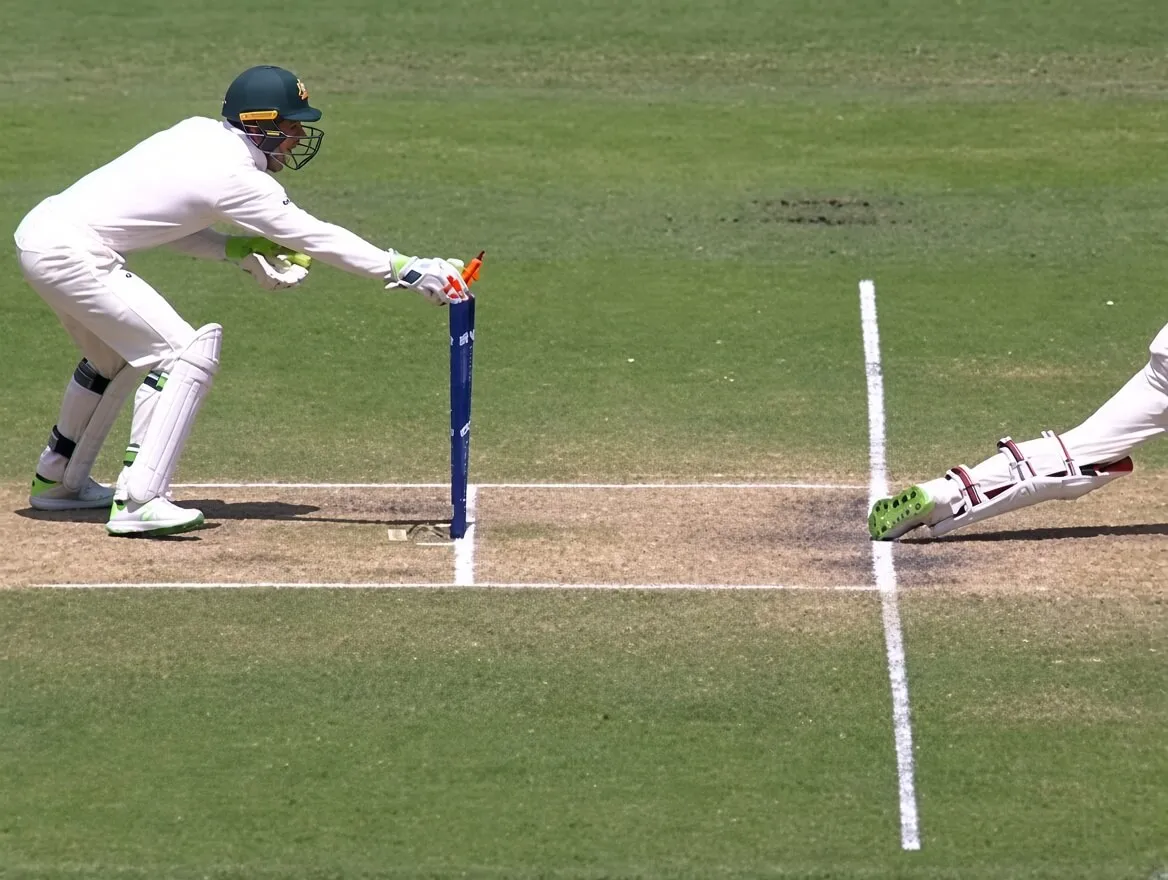
5. Stumped
The wicketkeeper dislodges the bails with the ball while the batter is out of their crease, typically after missing or charging at a delivery. The batter must have moved out of the popping crease without being in the act of running. Common against spin bowlers when batters dance down the pitch.
Stumped credits the bowler.
6. Hit Wicket
The batter accidentally hits their own stumps with their bat, foot, or any part of their body or equipment while playing a shot or setting off for a run. Common examples include falling backward onto the stumps after a quick bouncer or losing balance during a pull shot.
The dismissal credits the bowler. Roy Fredericks famously dismissed himself this way during his 169 in the 1975 World Cup final.
7. Hit the Ball Twice
The batter deliberately hits the ball twice with the bat or any other body part, except in lawful defence of the wicket. Hitting the ball back to a fielder a second time, even by reflex, can be considered out. This is one of the rarest dismissals in cricket history.
8. Obstructing the Field
The batter willfully obstructs or distracts the fielding side. Common examples include changing direction in a run to block a fielder's throw, deliberately handling the ball, or interfering with a catch. Until 2017, handled the ball was a separate dismissal. It is now folded into obstructing the field.
9. Timed Out
A new batter must be ready to face the next ball within 3 minutes (some formats use 2 minutes) of the previous batter's dismissal. If they take too long, they can be timed out. Angelo Mathews became the first international cricketer to be timed out in 145 years of Tests during the 2023 ODI World Cup against Bangladesh.
10. Retired Out
A batter who retires without the umpire's permission and does not return is recorded as retired out. This is different from retired hurt, where a batter retires due to injury and can return. Used tactically, the West Indies' Brian Lara never retired out, but the dismissal has been used in T20 cricket to allow more aggressive batters to come in.
11. Run Out at the Non-Striker's End (Mankad)
The bowler runs out the non-striker who is backing up out of their crease before the bowler has completed delivery. Once controversial and considered against the spirit of cricket, this dismissal was officially renamed from "Mankad" to "run out" in 2022 by the MCC, removing the ethical stigma. The non-striker is now expected to stay in their crease until the ball is bowled.
From experience: At club level, you see most of the common dismissals every week. Bowled, caught, LBW, run out, stumped account for over 95% of dismissals in any given match. The rare modes like obstructing the field or hit ball twice usually make headlines because they are so unusual. Knowing all 11 helps when you watch professional cricket and an umpire's signal seems unfamiliar.
Dismissals That Do Not Count Toward the Bowler
Important distinction in cricket statistics: not every dismissal credits the bowler. The bowler gets the wicket for:
Bowled
Caught (including caught and bowled)
LBW
Stumped
Hit Wicket
The bowler does NOT get credited for:
Run out
Hit the ball twice
Obstructing the field
Timed out
Retired out
Run out at non-striker's end
This distinction matters for career bowling averages and wicket counts.
Most Common Dismissals by Format
Format | Most Common Dismissal | Why |
|---|---|---|
Test | Caught (slips/keeper) | Swing and seam create edges |
ODI | Caught (boundary/inner ring) | Aggressive batting against deep fielders |
T20 | Caught at boundary | Batters going for sixes get caught at long boundaries |
For more on how dismissal patterns differ across over structures, see our format guide.
Credit: Cricino
Conclusion
Cricket has 11 official ways a batter can be dismissed, but in practice, 5 dismissals (bowled, caught, LBW, run out, stumped) account for nearly all wickets. The rare modes exist for fairness, ensuring batters cannot exploit loopholes through deliberate obstruction or ignoring the rules. Understanding all 11 makes you a better viewer and player. For the most disputed dismissal in cricket, read our detailed guide on LBW rules, and to see how dismissal frequency changes across formats, our cricket formats explained guide breaks it down.
FAQs
How many ways can you get out in cricket?
11 official methods under the Laws of Cricket, ranging from bowled and caught to rare dismissals like timed out and obstructing the field.
Which dismissals do not credit the bowler?
Run out, hit the ball twice, obstructing the field, timed out, retired out, and Mankad-style run outs. All other dismissals credit the bowler.
What is the rarest dismissal in cricket?
Timed out is the rarest in international cricket. Angelo Mathews in 2023 was the first ever in Test history. Hit the ball twice is also extremely rare.
Is Mankad still called Mankad?
No. In 2022, the MCC renamed it to simply "run out at the non-striker's end" to remove the ethical stigma. It is now treated like any other run out.