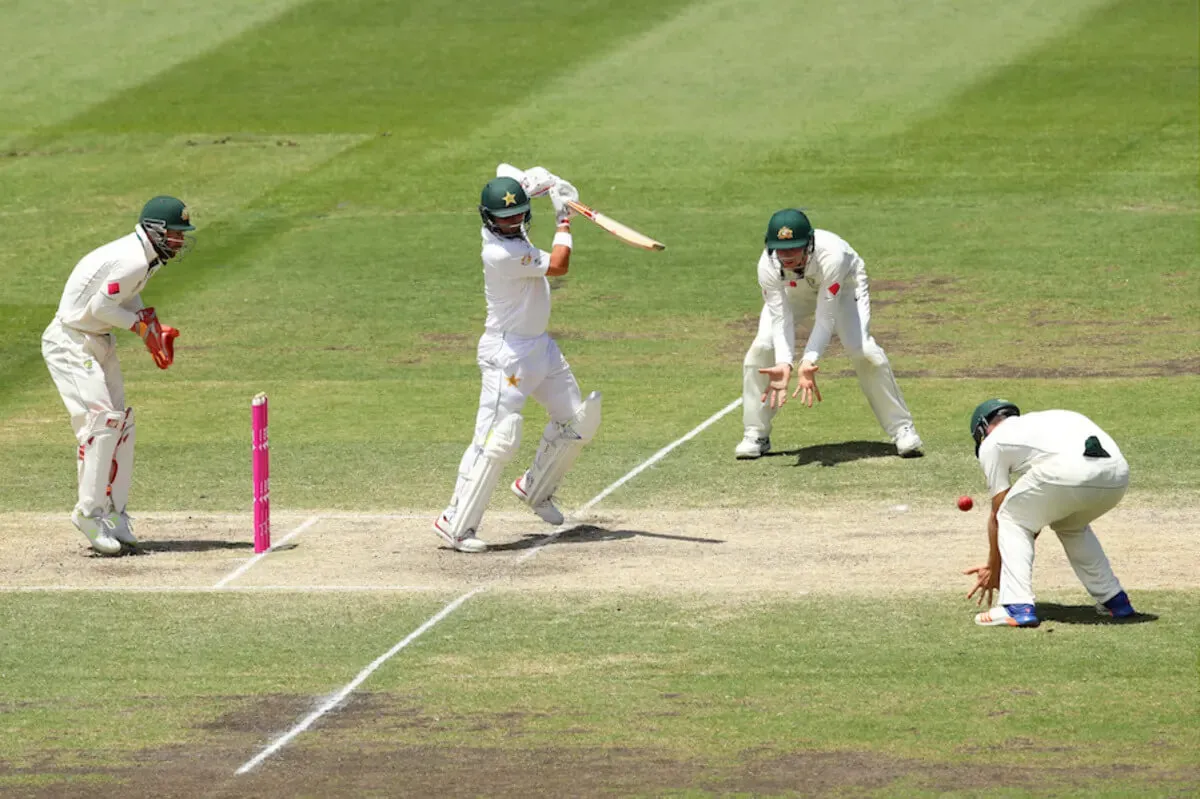
Silly point in cricket is a close catching fielding position on the off side, just a few feet in front of the batter. It is used mainly against spin, to snap up bat-pad catches and soft shots that pop into the air.
The name sounds like a joke, and the position looks like madness, standing that close to a swinging bat. But there is sharp thinking behind it. Here is where silly point stands, why it is called that, and why captains take the risk.
Where Does Silly Point Stand?
Silly point sits on the off side, roughly square of the batter or just in front, crowding right up to the edge of the pitch. It takes its line from the traditional point region but stands far, far closer to the bat.
Against a right-handed batter, that puts the fielder to their off side. When a left-hander is on strike, the captain shifts the fielder across so the position stays on the new off side.
How Silly Point Got Its Name:
The word point comes from the point area of the field, square on the off side. The silly is cricket's dry humor for any spot so close to the bat that standing there seems, well, a little silly.
It is the same idea behind silly mid-off and silly mid-on. The nearer and more dangerous the position, the more fitting the silly tag becomes.
Why Do Captains Use Silly Point?
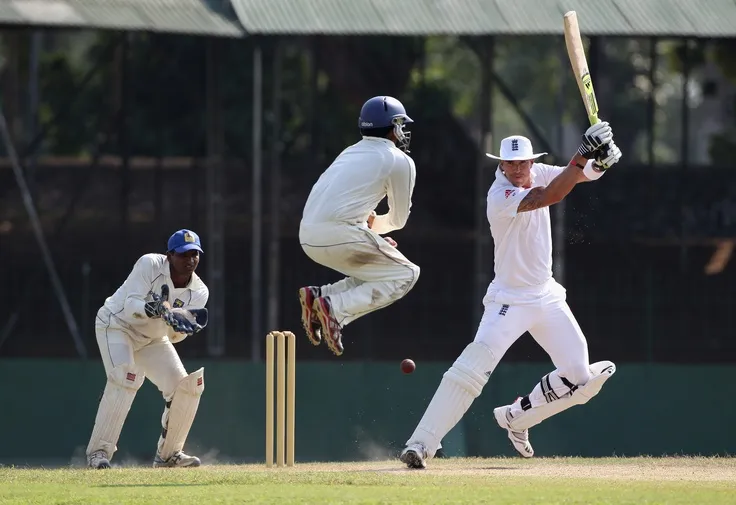
Silly point is an attacking move, almost always brought in for spin in Test cricket. As the ball grips and turns, a batter defending forward can pop a catch off the inside edge or the pad, straight to the waiting fielder.
Batting in club cricket, I have had a silly point crouched right on top of me. It is unnerving, and that is the whole point. It makes you second-guess every push and freeze on shots you would usually play.
It also chokes off the singles on that side, tightening the screw. With runs drying up and a catcher lurking, the batter is nudged toward a mistake.
The Danger of Fielding at Silly Point:
Standing a few feet from a batter who might smash the ball flat is genuinely risky. A firm shot gives the fielder almost no time to react, and painful blows come with the territory.
That is why silly point fielders wear a helmet, shin guards, and a box, and in most competitions a helmet is compulsory for anyone fielding that close. Fearlessness and quick reflexes matter as much as safe hands.
Silly Point vs Short Leg:
Silly point has a mirror image across the pitch. Short leg does the same job on the leg side, taking the bat-pad chances that balloon up as the batter works the ball to leg.
Captains often use both at once against a spinner on a turning pitch, ringing the batter with close catchers on either side to crank up the pressure.
Conclusion:
Silly point is one of cricket's bravest positions, a close catcher parked right under the batter's nose to turn spin into wickets. It is risky and it is nervy, but on a turning pitch, it can be the move that breaks a game open.
(FAQs):
Q1: What is the difference between silly point and point?
A: They share a line on the off side, but distance sets them apart. A regular point stands well back to save runs, while silly point crowds the bat to take catches.
Q2: Is silly point used against fast bowlers?
A: Rarely. It is almost always a spin position, because slower bowling gives the fielder a fighting chance and produces the bat-pad pops that silly point feeds on.
Q3: What is silly mid-off?
A: Another close catcher on the off side, but straighter, in front of the batter rather than square. It belongs to the same family of aggressive close-in positions.
Q4: Can you be caught at silly point off your pad?
A: Only if the ball hits the bat first. A bat-pad catch, where it flicks the bat then the pad, counts. A ball off the pad alone is not out caught.
Q5: Is silly point an attacking or defensive position?
A: Purely attacking. A captain sets it to take wickets, not to save runs, and usually only when pushing hard for a breakthrough.