The ball you choose changes everything - how it swings, how long it lasts, and whether it's safe to use indoors or in the backyard. Pick a hard leather ball for a casual knockabout and someone gets hurt; grab a soft practice ball for a club match and it falls apart in 10 overs. A good cricket ball matches the way you actually play. To make it simple, here are the 6 best cricket balls on Amazon right now - covering leather match balls, budget and value options, a club multipack, a soft practice ball, and a tennis/tape ball.
CricketerGuru is reader-supported. Some links below are affiliate links, which means we may earn a small commission at no extra cost to you. See our affiliate disclosure.
Quick Links
# | Product | Buy on Amazon |
|---|---|---|
1: Best Overall (Leather Match Ball) | Kookaburra County Club Cricket Ball | |
2: Best Budget Leather Ball | SG Shield Cricket Ball | |
3: Best Value Match Ball | ONEGlobal Select Leather Cricket Ball | |
4: Best Multipack for Clubs | BT Premium White Cricket Ball (Pack of 6) | |
5: Best Soft Practice Ball | AnNafi Soft Rubber Cricket Balls (Pack of 6) | |
6: Best Tennis/Tape Ball | Bratla Heavy Tennis Cricket Ball (Pack of 6) |
6 Best Cricket Balls
1. Kookaburra County Club Cricket Ball - (Best Overall)
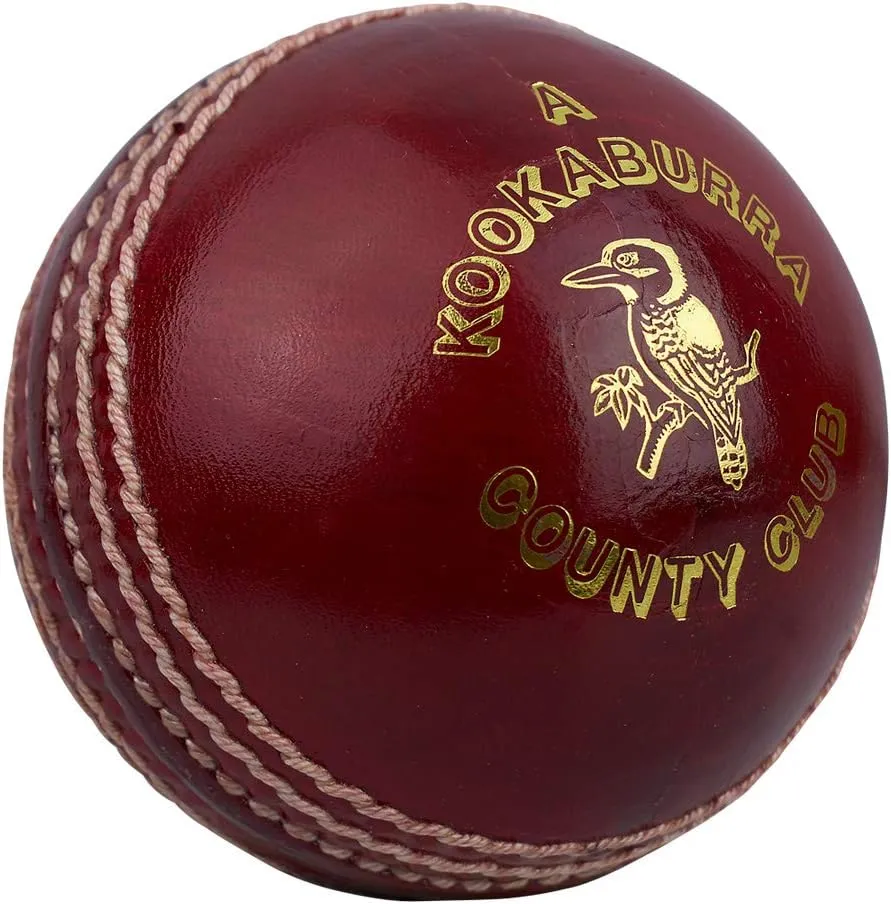
For a real match ball from a name you can trust, the Kookaburra County Club is the easy overall pick. Kookaburra is the most famous ball brand in cricket, and this one is built properly: a 4-piece hand-stitched construction with a 3-layer quilted center, waxed and finished to English standards with a durable hide cover. It's match and training quality at the standard 156g men's weight, and also comes in youth and women's sizes. With a strong 4.1-star rating from 217 reviews - the most on this list - at $33.02, it's the safe, do-everything choice.
Pros | Cons |
|---|---|
Pronounced seam suits swing and seam bowling early on | Hard ball - only safe with full protective gear |
The ball most clubs and leagues recognize by default | Needs regular shining to keep it swinging |
Holds its hardness and shape through a long innings | More ball than a casual or backyard player needs |
Easy to re-buy the same model season after season | Sold singly, so clubs pay more per ball than a multipack |
2. SG Shield Cricket Ball - (Best Budget Leather Ball)
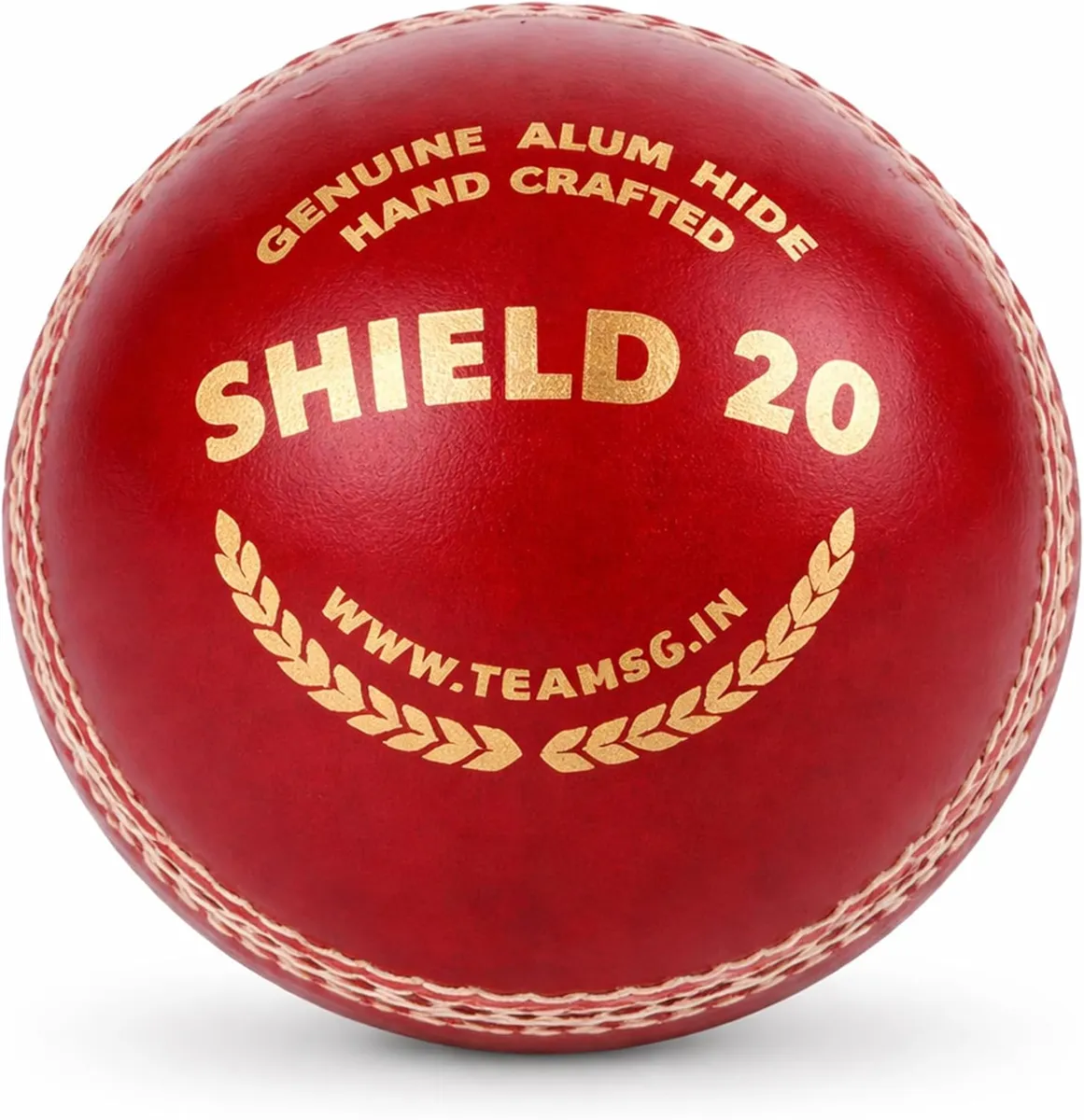
If you want a real leather ball for as little as possible, the SG Shield is the best budget buy. SG is a major cricket brand, and at just $13.99 this is the cheapest leather ball here. It uses a solid Grade 2 core for consistent bounce, machine stitching for a tough, long-lasting seam, and waterproof alum-tanned leather that holds up in damp conditions. It comes in red or white. With a 4.1-star rating from 185 reviews and 50+ bought each month, it's a reliable, affordable practice and club ball.
Pros | Cons |
|---|---|
Cheap enough that scuffing it on rough grounds won't hurt | Won't swing or seam like a premium 4-piece ball |
A great first hard ball when moving up from tennis-ball cricket | Seam feels flatter and less lively for bowlers |
Affordable enough to keep a few spares on hand | Better suited to practice than serious matches |
Tough seam handles repeated net sessions | Still a hard ball - protective gear required |
3. ONEGlobal Select Leather Cricket Ball - (Best Value Match Ball)
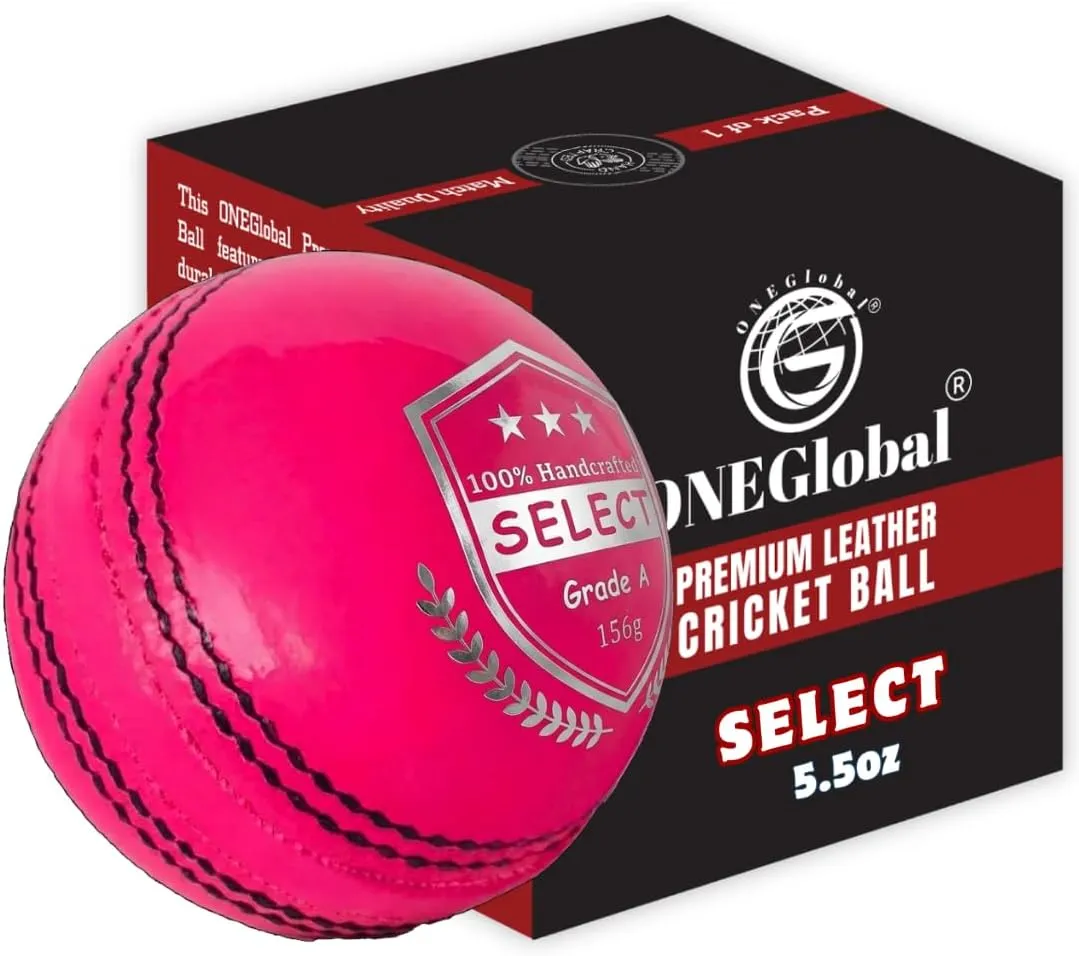
The ONEGlobal Select is a proper match-spec ball at a value price. It's a 100% handcrafted, 4-piece tanned leather ball at the full 156g (5.5oz) match weight, so it plays like a real ball for net practice and T20s. It comes in red, white, and pink, in packs of 1, 3, or 6, and even ships in gift-style packaging. At $16.99 for a single it's great value, though its 3.7-star rating from 93 reviews is the lowest here, so quality can vary - check the latest reviews before you buy.
Pros | Cons |
|---|---|
Plays close to a branded match ball for far less money | Quality reported as hit-or-miss between balls |
Good for stocking up cheaply before a season | No established brand reputation or backing |
Handy net ball when you don't want to wear out a premium one | May not last as long as a top-grade ball |
Worth inspecting each ball on arrival to pick the best | Hard ball - needs proper protective gear |
4. BT Premium White Cricket Ball (Pack of 6) - (Best Multipack for Clubs)
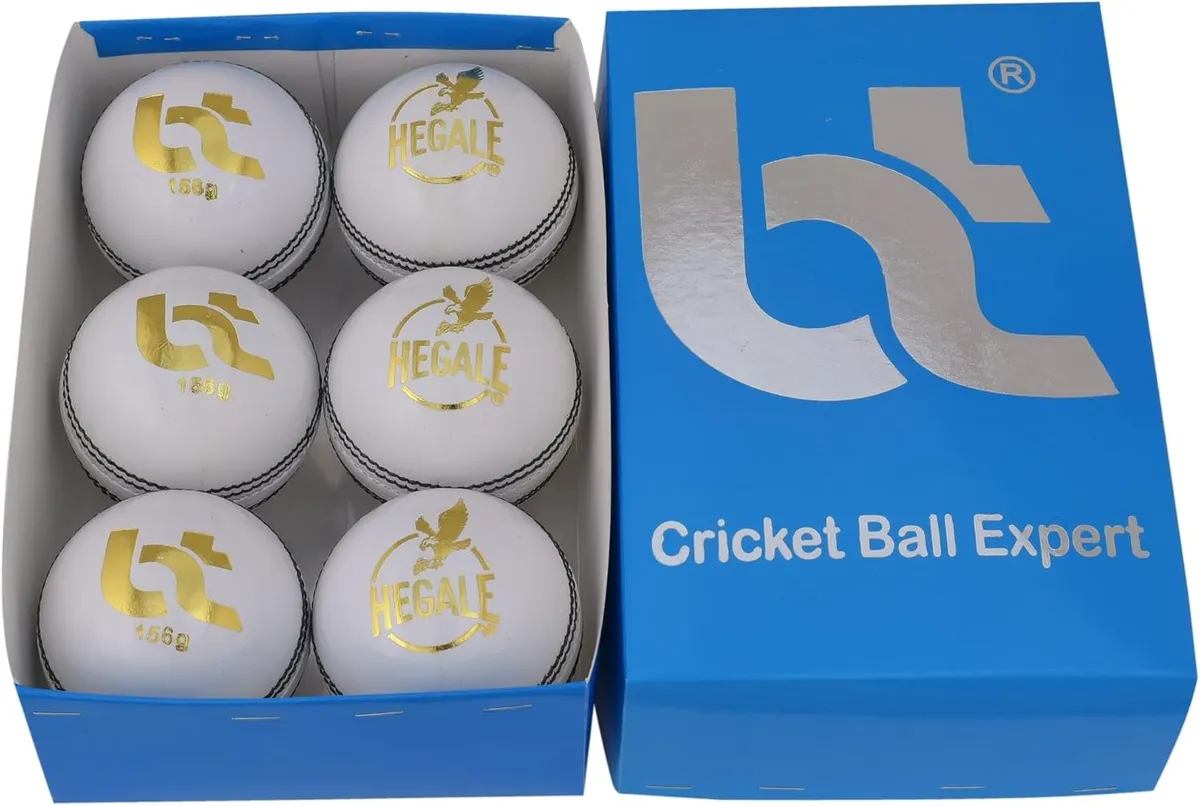
If you run a club or get through balls fast, buying in bulk saves money - and the BT Cricket Ball Expert pack is the best value multipack here. You get 6 white leather balls for $59.99 (about $10 each), each a 4-piece, 156g hand-stitched and machine-finished ball built to a professional spec. They're designed to last 20 to 50 overs and suit practice, T20s, ODIs, and Tests. With a 4.0-star rating from 66 reviews, it's a solid, cost-effective choice for teams and regular net sessions.
Pros | Cons |
|---|---|
Always have a spare ready when one goes soft | White balls scuff and discolor faster than red |
Enough balls to run a full net session without stopping | You commit to six of one maker sight-unseen |
Per-ball cost beats buying singles for a season | Far more than a single player at home needs |
Ideal for a team's shared kit bag | Consistency across the six can vary |
5. AnNafi Soft Rubber Cricket Balls (Pack of 6) - (Best Soft Practice Ball)
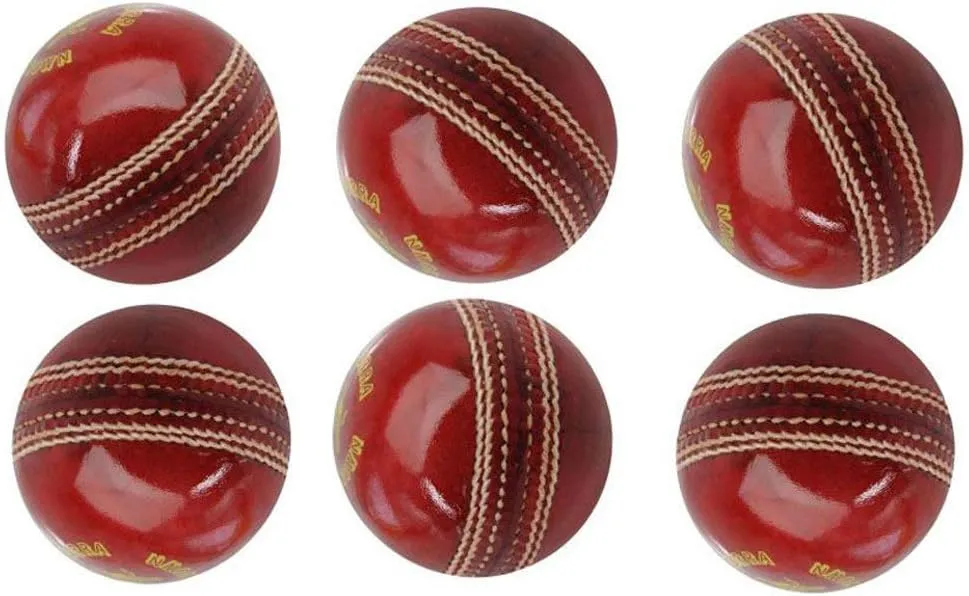
For safe practice indoors, with kids, or learning to play spin, the AnNafi soft rubber ball is the best pick - and it has the highest rating on this list at 4.3 stars. These hand-stitched rubber balls come in red with a white seam for visibility, and they hold their shape across many games. They're ideal for indoor and outdoor practice, pitching drills, and getting great spin without the danger of a hard leather ball. The pack of 6 is $62.99 (singles from $14.99), backed by a 30-day money-back guarantee.
Pros | Cons |
|---|---|
Safe to use in a hall, garage or living room | A pack of six is a lot if you only need one |
Great for introducing kids without fear of injury | Won't prepare you for real match pace |
Lets bowlers work on grip and spin risk-free | Can feel bouncy and unrealistic on hard surfaces |
Won't damage your bat the way a hard ball can | Not legal for formal hard-ball matches |
6. Bratla Heavy Tennis Cricket Ball (Pack of 6) - (Best Tennis/Tape Ball)
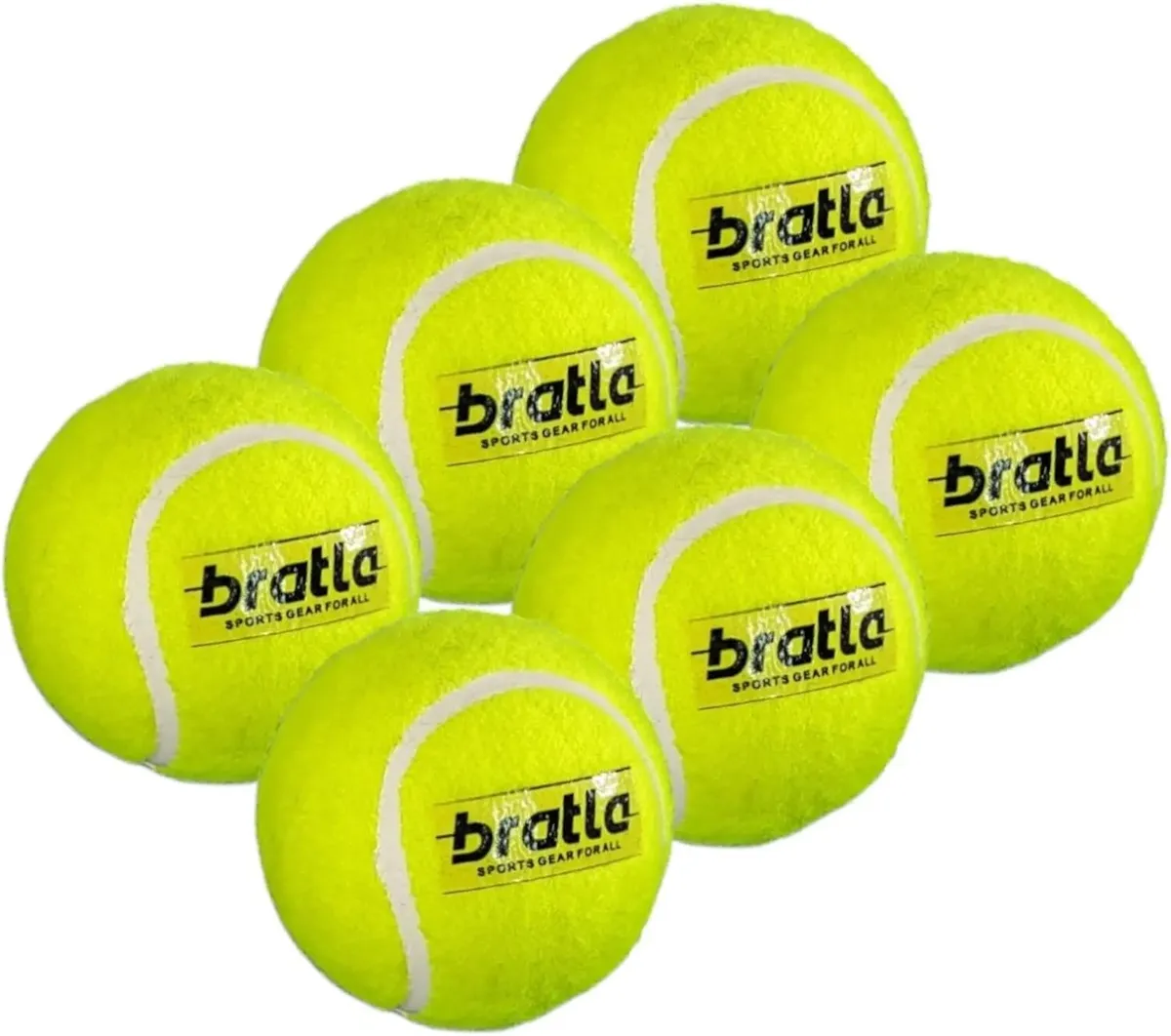
For tape-ball and gully cricket, you want a heavy tennis ball - and the Bratla pack is the best value here. Each ball weighs 120-130g, the standard weight for serious tape-ball cricket, so it carries and bounces far more realistically than a light tennis ball. You get a pack of 6 for $16.95 - just $2.83 per ball, the cheapest per-ball price on this list - and they're built tough for repeated softball cricket games. It's a newer listing with a 4.1-star rating from 9 reviews, but 50+ are bought each month.
Pros | Cons |
|---|---|
Heavier than a normal tennis ball, so wind affects it less | Won't prepare you for the pace of a leather ball |
Six balls keep a match going if a few get lost | Limited review history to judge long-term wear |
No protective gear needed - safe for street and park | Can wear smooth on rough concrete over time |
Bridges the gap between a soft tennis ball and leather | One color only, less visible on some backgrounds |
Buying Guide: How to Choose the Best Cricket Ball
The right ball comes down to how you play, where you play, and your budget. Here's what to check.
Leather vs Rubber vs Tennis
Leather balls (Kookaburra, SG, ONEGlobal, BT) are the real thing for hard-ball matches and serious nets. Soft rubber balls (AnNafi) are made for safe indoor and practice use. Heavy tennis balls (Bratla) are for tape-ball and gully cricket. Buy for the format you actually play - a hard leather ball is not safe for a casual backyard game.
Ball Construction
Better leather balls use a 4-piece hand-stitched cover, which holds its shape and swings well; cheaper balls use a simpler 2-piece or one-piece core. Hand-stitched seams last longer and feel better than machine-stitched ones. If you want the full breakdown, see our guide on what a cricket ball is made of.
Weight and Size
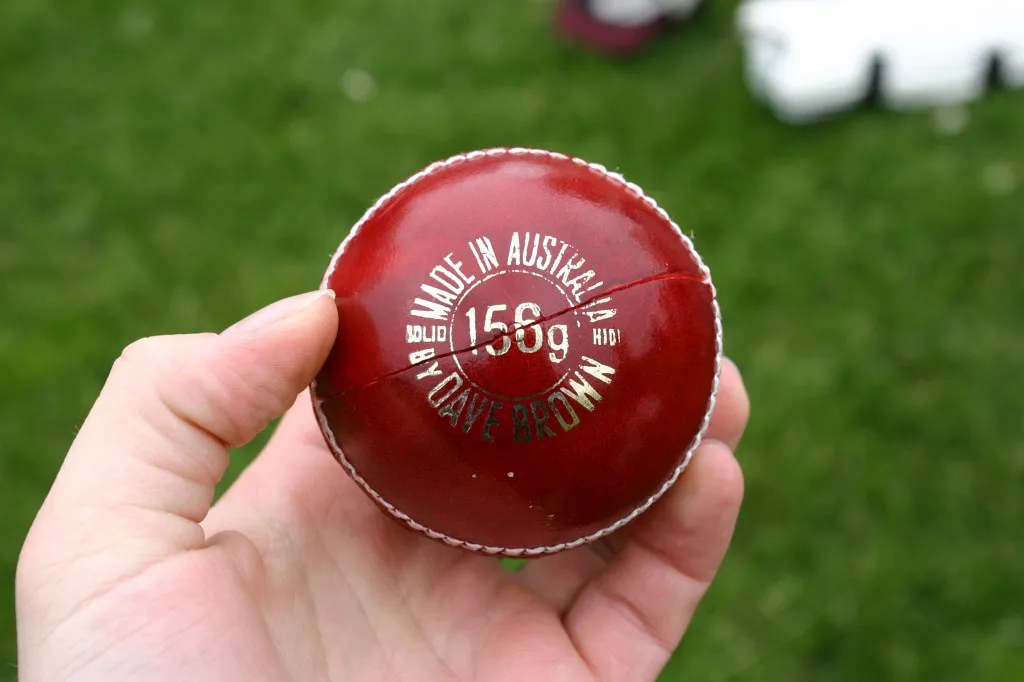
A standard men's ball weighs 156g (5.5oz); women's and youth balls are slightly lighter. All the leather balls here meet the men's standard. For the exact regulations, check our guide to cricket ball weight and size.
Color
Red balls are used for Tests and longer red-ball cricket, white balls for limited-overs and night games, and pink for day-night Tests. Pick the color for your format - our guide on red vs white vs pink cricket balls explains the differences.
Grade and Price
Leather balls come in grades - higher grades (and 4-piece construction) cost more but last longer and play truer. Grade 2 balls like the SG Shield are great affordable practice balls; premium match balls cost more. On this list, prices run from $13.99 to $62.99.
Single vs Multipack
For one bat-and-ball at home, a single ball is fine. If you run a club, coach, or get through balls quickly, a multipack (BT's 6-pack, or the AnNafi and Bratla 6-packs) drops the per-ball cost significantly.
Match the Ball to Your Bat
If you play tape-ball or tennis-ball cricket, pair these balls with the right bat - see our picks for the best tennis ball cricket bats.
From experience: At club and district level cricket, the difference between a cheap practice ball and a proper match ball is huge. A good match ball keeps its shape, swings consistently, and the seam stays up for 30+ overs. Cheap balls go soft fast and the seam flattens. For nets it does not matter much. For match cricket, do not save money on the ball.
Frequently Asked Questions
Q1: How much does a cricket ball weigh?
A: A standard men's cricket ball weighs 156g (5.5oz). Women's balls weigh about 140g and junior balls around 133g. Tennis/tape balls used for softball cricket are lighter, usually 120-130g.
Q2: What is the difference between a leather and a tennis cricket ball?
A: A leather ball is hard, heavy, and used for real matches - it swings and seams but needs protective gear. A tennis or tape ball is soft or rubber, safer, and used for backyard, gully, and indoor cricket. Use leather only with proper protection.
Q3: Why are cricket balls different colors?
A: Red balls are used in Tests and red-ball cricket, white in limited-overs and night matches because they show up under lights, and pink in day-night Tests as a balance of both. Each behaves slightly differently in the air.
Q4: How many overs does a cricket ball last?
A: A good leather match ball is designed to last a full innings - typically 20 to 50 overs or more, depending on the surface and how it's looked after. Cheaper practice balls and soft balls wear faster.
Q5: What are the best cricket balls overall?
A: For most players the Kookaburra County Club is the best overall - a trusted brand, 4-piece hand-stitched, and match quality. The SG Shield is the best budget leather ball, the AnNafi soft ball is best for safe practice, and the Bratla heavy tennis ball is best for tape-ball cricket.