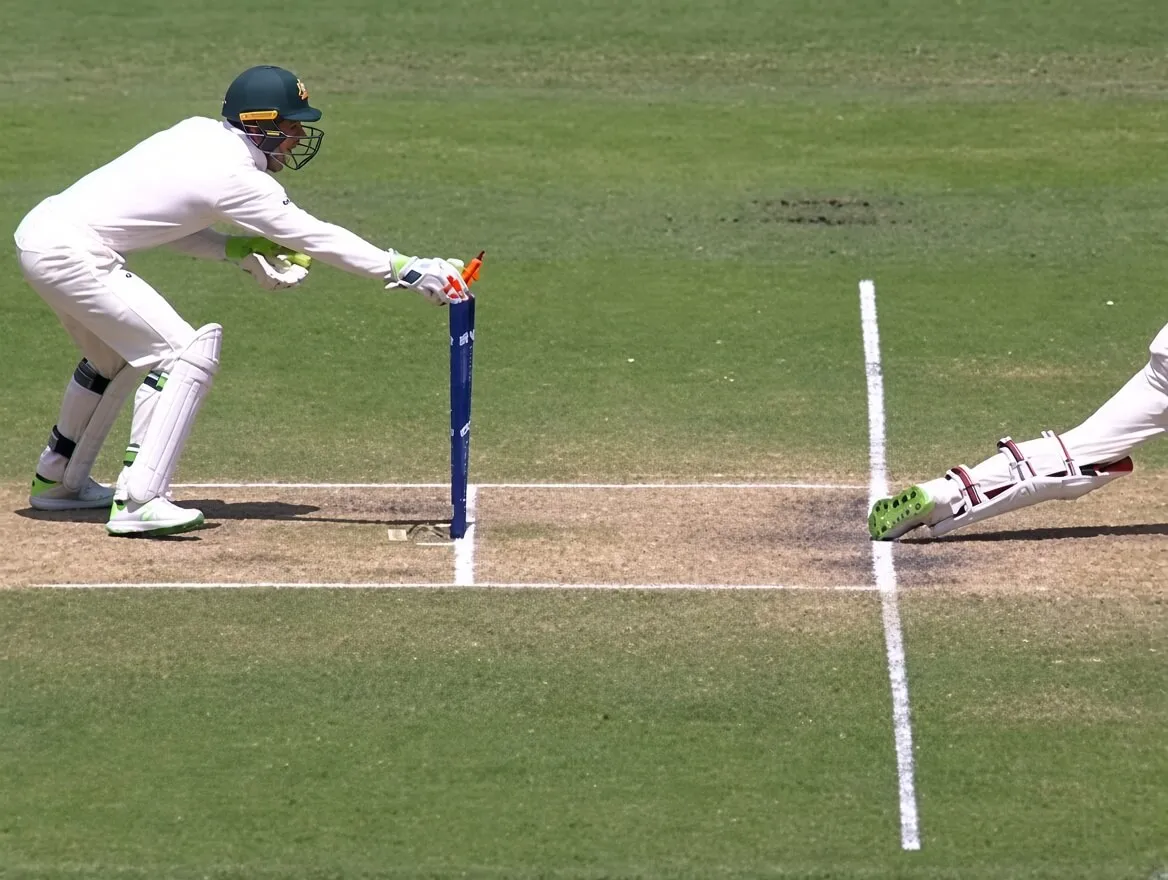
Obstructing the field in cricket is a rare way for a batter to be out. It happens when a batter deliberately blocks or distracts the fielding side, by word or action, while the ball is in play.
It is one of the ten ways a batter can be dismissed, and one of the least seen. Because it turns on the batter's intent, it almost always sparks debate the moment an umpire gives it.
Is Obstructing the Field Cheating?
In a sense, yes. Since it must be deliberate, a batter out this way has broken a rule on purpose. It can also count against the spirit of cricket, and a serious case may bring conduct sanctions on top of the lost wicket.
What Counts as Obstructing the Field?

Listed as Law 37 of the Laws of Cricket, the dismissal covers any deliberate act that stops the fielding side from doing its job, whether that is taking a catch, making a run out, or simply gathering the ball.
It Must Be Deliberate:
Intent is everything here. A batter is only out if the act is willful, so an accidental collision, a move to avoid injury, or lawfully guarding the wicket does not count.
That is why the decision is left to the umpires. They judge whether the batter meant to interfere, and if the wrong call is easy to argue, it usually is.
Common Examples:
The most common case in modern cricket is a batter who sees a run out coming and blocks the throw. Changing course to get in the ball's path, or stopping it with the bat or a spare hand, can all bring the dismissal.
Why It Is So Rare:

Obstructing the field has been given only a handful of times in international cricket. The main reason is that intent is so hard to prove, and umpires give the batter the benefit of any real doubt.
On top of that, the fielding side must appeal for it, just as with any dismissal. Umpires will not give a batter out for obstruction on their own.
In club games, I have seen this appeal go up a few times, and it is always a mess. Half the fielders are certain it was deliberate, the batter swears it was instinct, and nobody truly knows but the player.
What Happens to the Runs?
If a batter is out obstructing the field, any runs completed before the act still count, along with any penalty runs. The exception is when the obstruction stops a catch, in which case those completed runs are wiped off.
Obstructing the Field and Handled the Ball:
There used to be a separate dismissal called handled the ball, for a batter who stopped the ball with a hand not holding the bat. In 2017 it was folded into obstructing the field.
So today, deliberately handling the ball is simply treated as one form of obstruction, which is why you no longer see handled the ball given as its own dismissal.
Notable Obstructing the Field Dismissals:
Because it is so rare, each case tends to be remembered. In Test cricket the obstructing the field dismissal has been given only a couple of times, most famously to England's Len Hutton back in 1951.
It shows up a little more often in one-day and T20 cricket, though still only a handful of times overall. Every instance is replayed and argued over long after the game ends.
Conclusion:
Obstructing the field is one of cricket's rarest dismissals, and one of its most debated. It comes down to a single question: did the batter deliberately interfere with the fielding side? Because that intent is so hard to prove, umpires rarely give it. When they do, under Law 37, the moment is almost always argued over long afterward.
(FAQs):
Q1: Does the bowler get the wicket for obstructing the field?
A: No. The batter is out, but the wicket is not credited to any bowler. It goes down as a dismissal without a bowler's name attached, much like a run out.
Q2: Can you be out obstructing the field off a no-ball?
A: Yes. The dismissal still applies even when the delivery is a no-ball, since a batter cannot deliberately interfere with the fielding side at any time.
Q3: Is obstructing the field the same as a run out?
A: No. A run out is the fielding side breaking the stumps while a batter is short of the crease. Obstruction is the batter deliberately interfering, though the two often happen in the same tense moment.
Q4: Can a batter be out for distracting a fielder with words?
A: Yes. The law covers obstruction or distraction "by word or action", so shouting to put a fielder off, or a deliberate movement to distract them, can both count.