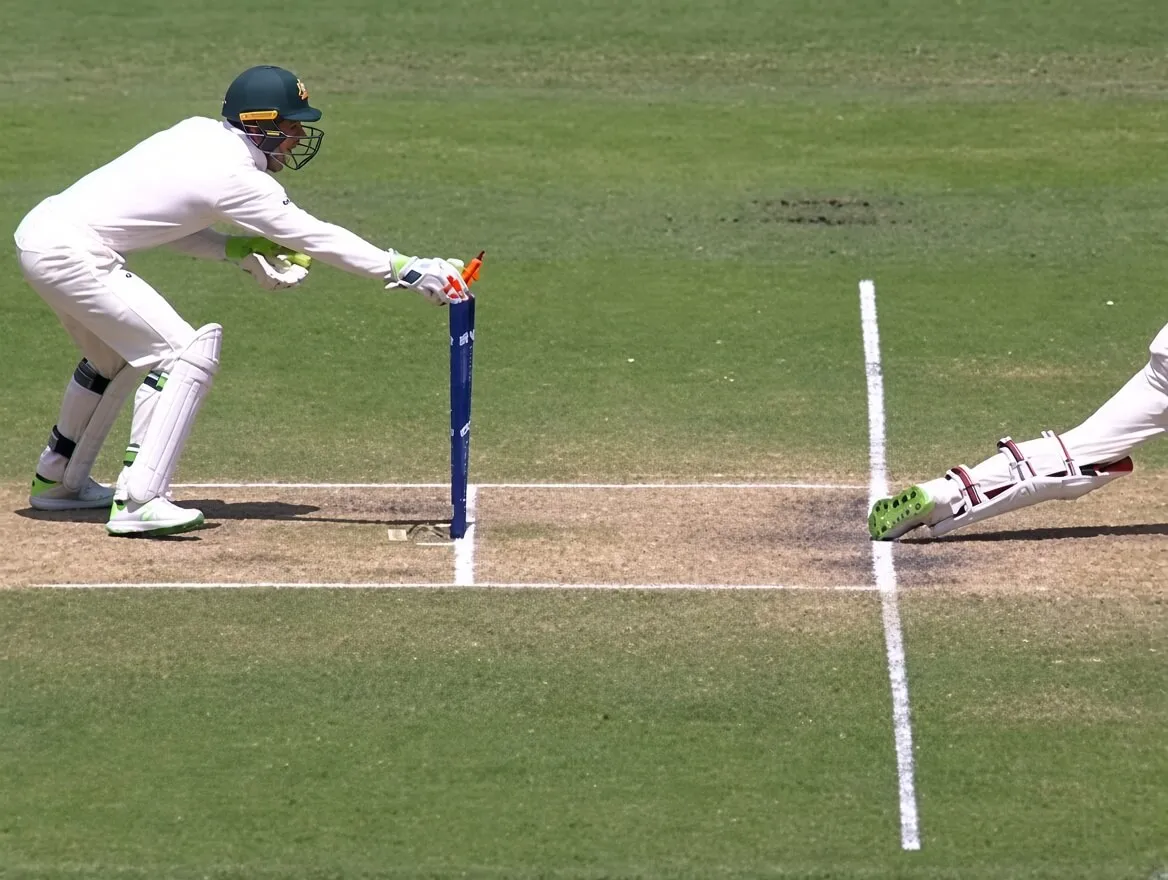
A bump ball in cricket is when the batter hits the ball into the ground and it loops up to a fielder, looking exactly like a clean catch. It is not out, because the ball touched the ground before it was caught.
That single bounce sets up cricket's most common false alarm. Here is why a bump ball happens, how umpires prove it, and what a fielder is really supposed to do.
Why a Bump Ball Is Not Out:
To be given out caught, the ball must carry from the bat to the fielder without touching the ground. A bump ball fails that test, so however clean the grab looks, the batter stays.
Batting in club cricket, I have chopped down on a ball and watched a fielder celebrate a catch that never counted. You feel the pitch under the bat, so you know to hold your ground.
What Causes a Bump Ball:
Bump balls come from full deliveries. A yorker or a low full toss lands right at the batter's feet, so the bat and the pitch meet at almost the same spot.
A defensive prod or a jammed-down drive does the rest. The ball squirts up off the ground and climbs as if it had flown off the middle of the bat.
How Umpires Prove a Bump Ball:

With the naked eye it is nearly impossible to be sure, because the bounce and the bat contact happen in the same instant. The giveaway is a slight dip before the ball climbs.
Today the third umpire settles the close calls. A slow-motion replay freezes the moment and shows plainly whether the ground got there first.
Should a Fielder Claim a Bump Ball?

This is where the spirit of cricket comes in. A fielder who knows the ball bounced is not meant to appeal as though it were a clean catch.
In the heat of the moment many still go up, then pull back once the replay is clear. Claiming a catch you know bounced is viewed as poor sportsmanship.
Frequently Asked Questions
Q1: Why is it called a bump ball?
A: Because the ball bumps off the ground the instant after the bat hits it. That quick contact with the pitch gives the shot its name.
Q2: What is a crowd catch?
A: Another name for a bump ball. The crowd often erupts as if a catch has been taken, before realizing the ball had already hit the ground.
Q3: Is a bump ball a no-ball or a dead ball?
A: Neither. It comes off a normal legal delivery and the ball stays in play, so the batters can even run while the fielders appeal.
Q4: Can a bump ball ever get a batter out?
A: Not caught, but yes another way. Since the ball is live, the batters can be run out if they go for a run and are short of the crease.
Q5: Does a bump ball count as a ball in the over?
A: Yes. It is a legal delivery, so it counts as one of the six balls in the over and as a ball faced by the batter.