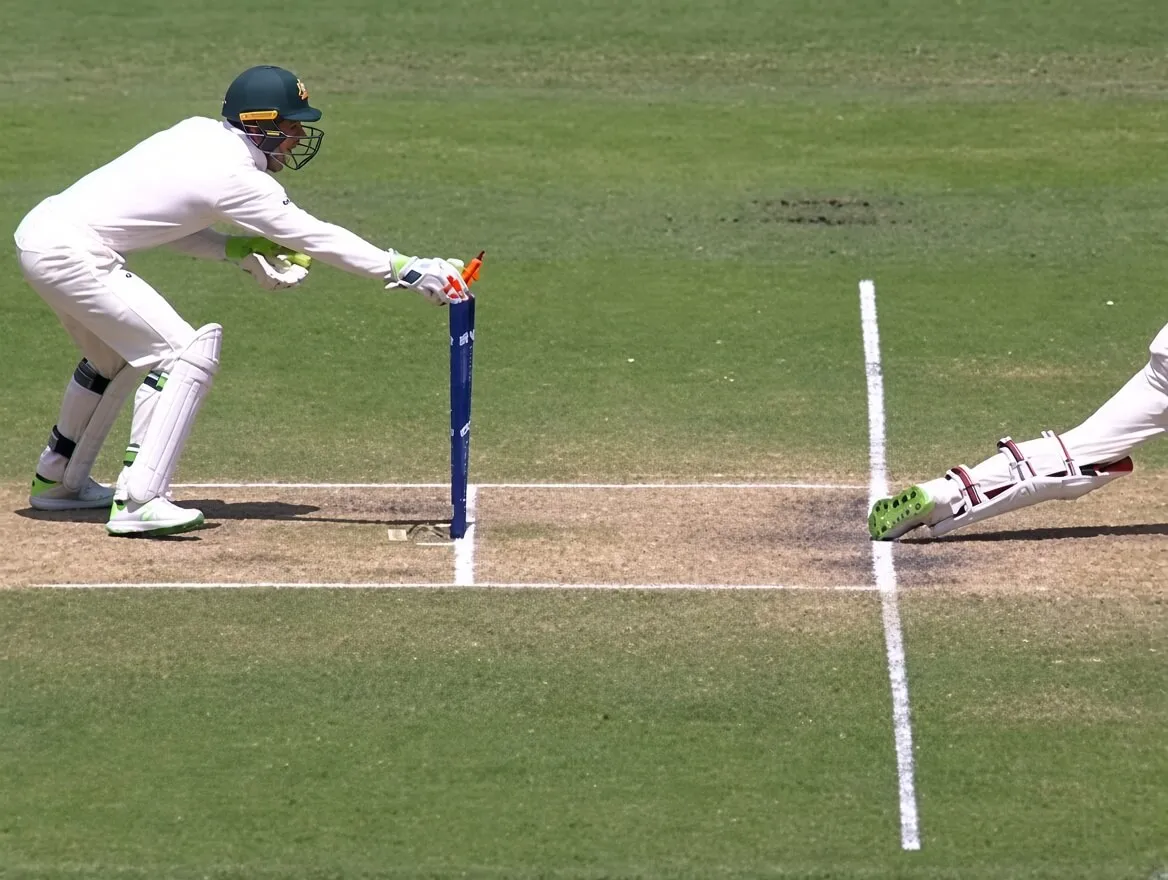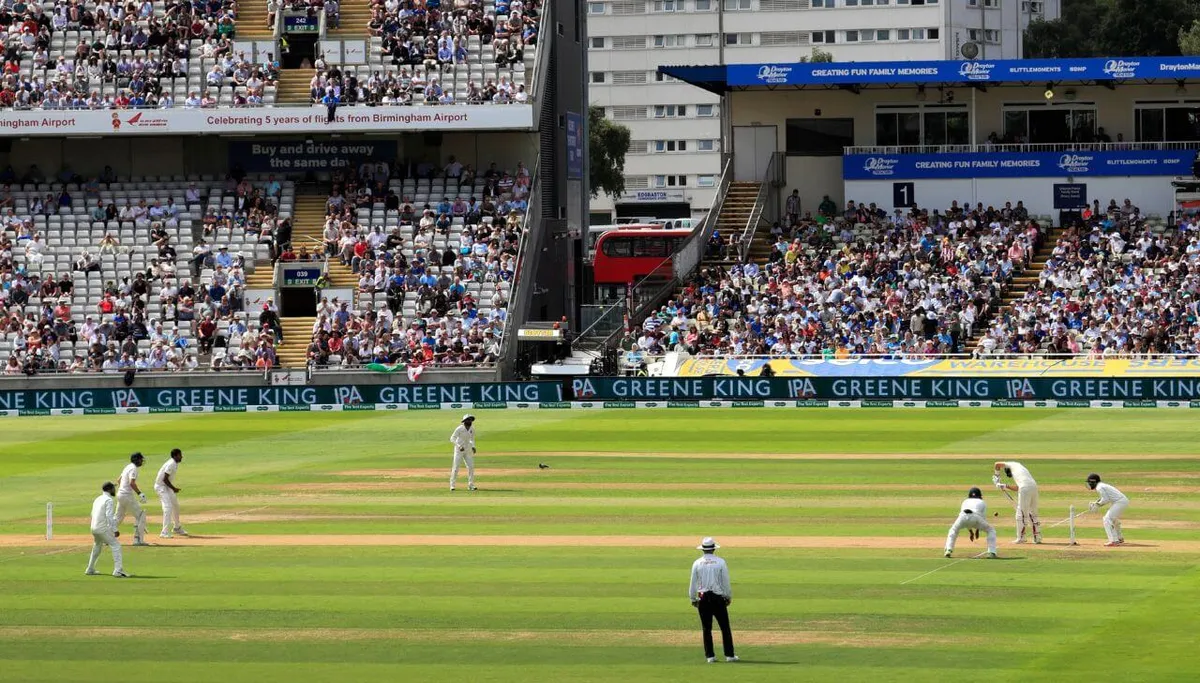
A Test match in cricket is the sport's oldest and longest format, played between two national teams over up to five days, with each side batting twice. It is widely seen as the ultimate examination of a player's skill, patience, and stamina.
For everything about Test timing, sessions, and overs, our match duration guide covers it in full. Here is where the name comes from, how a Test can actually end, and which teams get to play it.
Where Does the Name "Test" Come From?
The phrase goes back to 1861 to 1862, during the first English cricket tour of Australia, led by H.H. Stephenson, the very bowler behind cricket's first hat trick.
Those matches were called a genuine test of relative skill between English and Australian cricketers. The label stuck, though Test cricket itself did not become an officially recognized format until the 1890s.
The First-Ever Test Match:
The match now recognized as the first Test was played from 15 to 19 March 1877 at the Melbourne Cricket Ground, between Australia and England.
Australia won by 45 runs. Charles Bannerman top-scored with 165, retiring hurt, and remains cricket's first Test centurion.
The Four Possible Results in a Test:
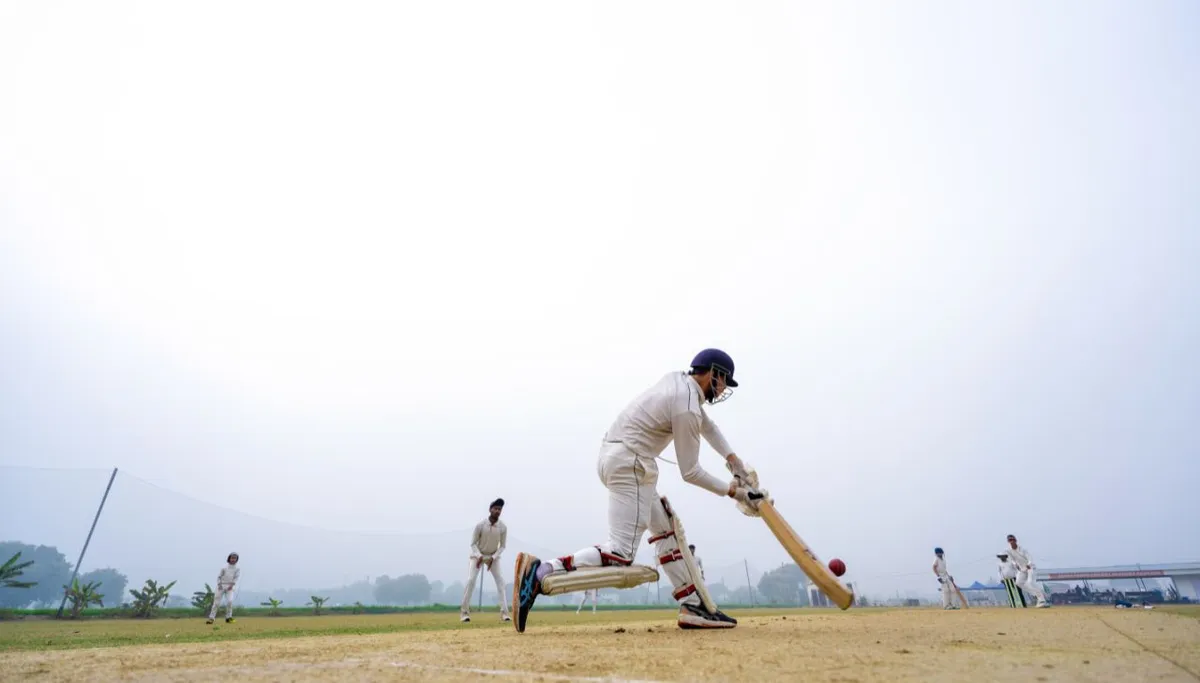
Unlike limited-overs cricket, a Test can end four different ways: a win, a loss, a draw, or the rarest of all, a tie.
A draw happens when time runs out before either side can force a result. A tie needs the scores level with the side batting last fully bowled out, and it is astonishingly rare.
Only two ties have happened in over 2,500 Test matches since 1877, Australia against the West Indies in 1960 and Australia against India in 1986. Australia is the only team involved in either.
Which Countries Play Test Cricket?
Test status is reserved for the 12 full members of the International Cricket Council. Ireland and Afghanistan were the most recent additions, awarded Test status in 2017.
Playing in club cricket, the closest most of us get to that level is imagining it, five days is a different world from a weekend fixture, and the gap in patience required is enormous.
What Is the World Test Championship?
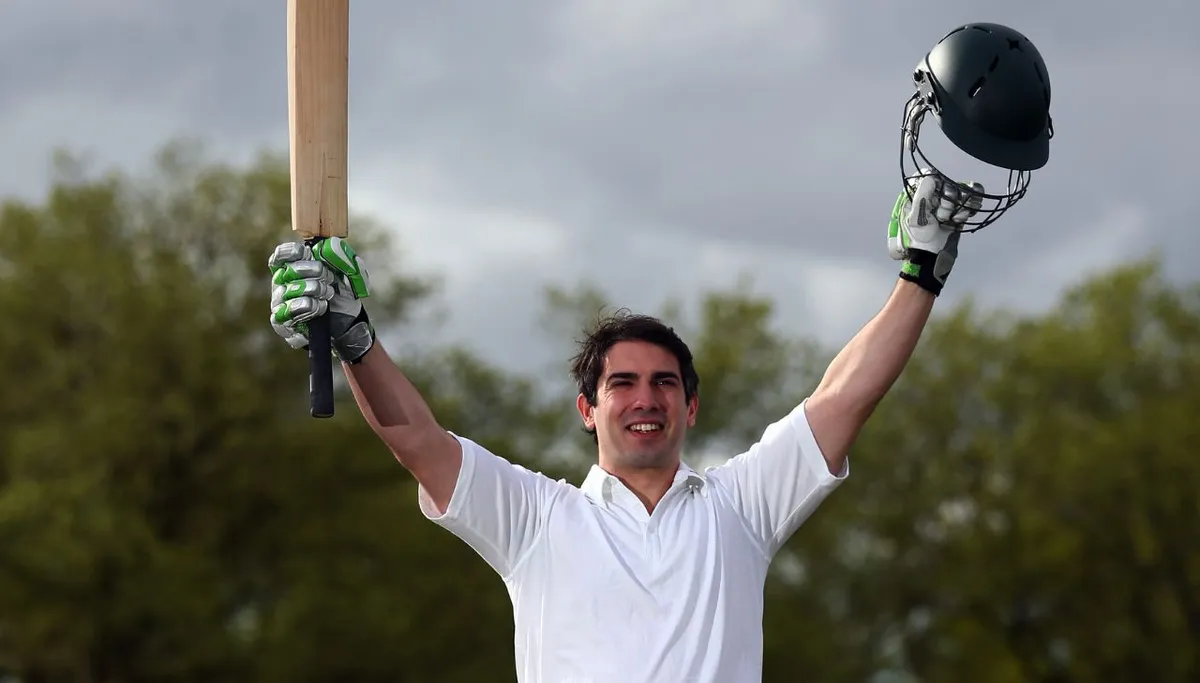
Introduced to give Test cricket a proper league structure, the World Test Championship runs on a two-year cycle involving nine of the twelve Test nations.
Teams earn points for results, a win worth 12, a tie 6, and a draw 4, before the top two meet in a one-off final. South Africa were the most recent champions.
Why Is There No Free Hit in Test Cricket?
Wides and no-balls happen in every format, Tests included. A no-ball still costs one penalty run and gets re-bowled, exactly as it always has.
What Tests never adopted is the free hit. The ICC introduced it for ODIs in 2007, later extending it to T20s, as a way to punish bowlers harder and boost the entertainment factor of limited-overs cricket.
Test cricket deliberately kept the old penalty. The format is built around a fair contest between bat and ball across five days, and a free hit would hand batters an outsized reward for a single overstepped delivery.
Conclusion:
A Test match is cricket stripped back to its purest test of endurance, five days, four innings, and four possible outcomes. From a coined phrase in the 1860s to a modern World Championship, it remains the format every serious cricketer wants to conquer.
(FAQs):
Q1: How is a Test match different from an ODI or T20?
A: Mainly the length and innings. A Test allows two innings per side across five days, while ODIs and T20s give each team a single, fixed-over innings. See our formats guide for the full breakdown.
Q2: Can a Test match end early?
A: Yes. If both teams complete their innings before day five, the match ends there and then. Some Tests have finished in under two days.
Q3: What happens if nobody wins a Test?
A: It is declared a draw, cricket's most distinctive result. Unlike almost every other sport, a hard-fought match can still end with no winner at all.
Q4: Why do some nations not have Test status?
A: Test status is earned through the ICC's Full Membership, based on a country's cricket infrastructure and performance. Nations without it play ODIs and T20Is instead.
Q5: Does a no-ball in a Test give a free hit?
A: No. A no-ball still costs a penalty run and is re-bowled, but the free hit that follows a no-ball in ODIs and T20s has never applied to Test cricket.