Oiling a cricket bat is the simplest way to protect it from cracking, drying out, and losing performance. Raw linseed oil penetrates the willow fibres, keeps them flexible, and adds moisture resistance. Whether you have just bought a new bat or are preparing for a new season, knowing how to oil a cricket bat correctly takes 10 minutes and can add years to your bat's life. Here is the complete process.
Why Oil a Cricket Bat?
Willow is a natural material that dries out over time. Dry willow becomes brittle, cracks more easily on impact, and loses its spring. Oiling does three things:
Prevents cracking: Oil keeps the wood fibres supple and flexible
Improves moisture resistance: Oiled willow absorbs less water from damp conditions
Extends bat life: A well-oiled bat can last 2-4 seasons compared to 1-2 without oiling
This is especially important for English willow bats which are softer and more prone to drying out than Kashmir willow.
What Oil to Use
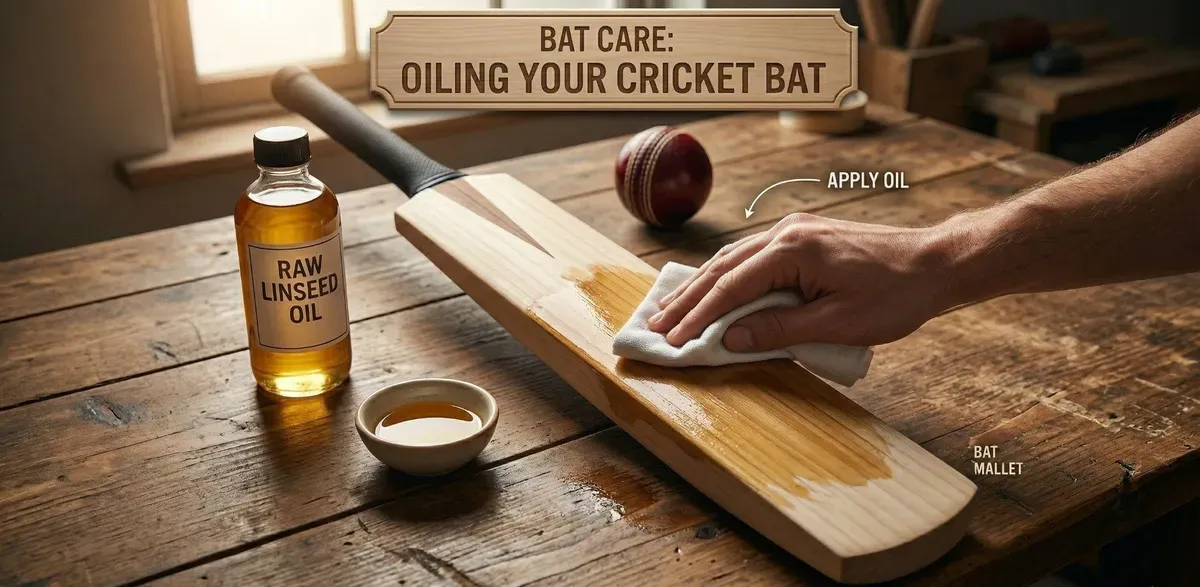
Use raw linseed oil only. This is critical.
Raw linseed oil: Penetrates slowly, conditions the wood properly. This is what you want
Boiled linseed oil: Contains chemical drying agents that can damage the willow. Do not use
Bat-specific oils: Some brands sell "cricket bat oil" which is usually raw linseed with added conditioning agents. Fine to use
Other oils (coconut, olive, etc.): Do not use these. They do not penetrate willow correctly and can leave sticky residue
How to Oil a Cricket Bat: Step by Step
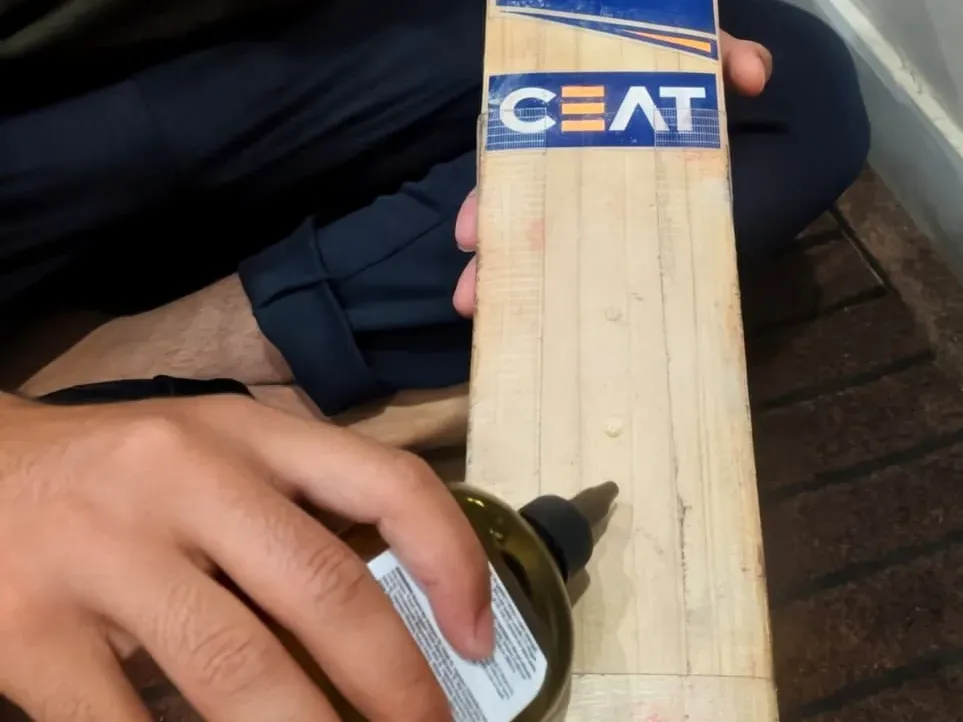
Lightly sand the surface with fine sandpaper (180-200 grit) to remove any coating or dirt. This helps the oil penetrate
Pour about 1 teaspoon of raw linseed oil onto a soft cloth
Rub the oil evenly across the face, edges, back, and toe of the bat
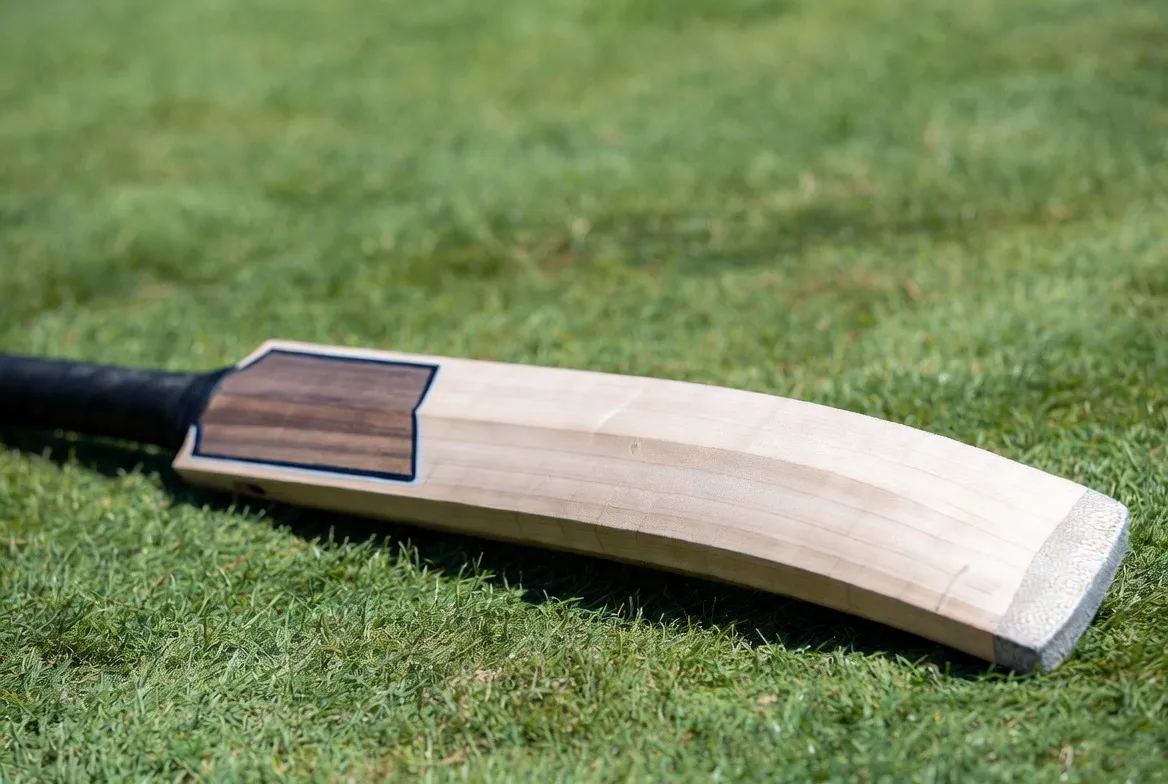
Do NOT oil the splice area (where the handle meets the blade) or the handle itself. Oil weakens the glue
Lay the bat flat, face up and let it dry for 24 hours
Repeat for 2-3 coats total, with 24 hours drying between each coat
How Much Oil Is Enough?
Less is more. The bat should look slightly darker after oiling, not wet or shiny. If oil is pooling on the surface, you have used too much.
New bat: 2-3 coats before knocking in
Start of season: 1-2 coats to re-condition
Mid-season: 1 light coat if the bat looks dry or pale
Maximum per year: Do not exceed 5-6 coats total across the entire season
From experience: I once over-oiled a brand new bat before a district match. It felt sluggish and heavy for weeks. The willow was saturated, and the sweet spot felt dead. Stick to thin coats and be patient.
Common Oiling Mistakes
Over-oiling: Makes the bat heavy, soft, and unresponsive. 2-3 thin coats is enough for a new bat
Oiling the splice/handle: Weakens the glue joint between handle and blade. Stay away from the splice
Using boiled linseed oil: Contains drying agents that damage willow. Only raw linseed
Not letting it dry: Each coat needs 24 hours minimum. Rushing leads to oil sitting on the surface instead of penetrating
Oiling a dirty bat: Dirt and grime block absorption. Clean and lightly sand first
When to Oil Your Bat
Situation | Coats Needed | Notes |
|---|---|---|
Brand new bat | 2-3 coats | Before knocking in |
Pre-season prep | 1-2 coats | After winter storage |
Mid-season touch-up | 1 coat | Only if bat looks dry |
After repair | 1 coat | Around repaired area |
Oil vs Wax: Which Is Better?
Some players use bat wax instead of oil. Here is the difference:
Oil: Penetrates the wood, conditions fibres from inside. Better for long-term protection
Wax: Sits on the surface, creates a water-resistant barrier. Better for quick surface protection
Best approach: Oil first for deep conditioning, then apply wax on top for surface protection during wet-weather matches.
Credit: B3 Cricket
Conclusion
Oiling your cricket bat is one of the easiest things you can do to protect your investment. Use raw linseed oil, apply thin coats, avoid the splice, and let it dry fully between coats. Combined with proper knocking in and a toe guard, your bat will last multiple seasons. Choose the right bat size and the right willow type, take care of it, and it will take care of your runs.
FAQs
Can I use olive oil or coconut oil on my cricket bat?
No. Only raw linseed oil is suitable. Other oils do not penetrate willow properly and can leave sticky residue that attracts dirt.
How often should I oil my cricket bat?
2-3 coats for a new bat, then 1-2 coats at the start of each season. Mid-season, only oil if the bat surface looks dry or pale.
What happens if I over-oil my bat?
The bat becomes heavy, soft, and unresponsive. The wood gets saturated and loses its natural spring. If you have over-oiled, let the bat dry completely for several days before using it.
Should I oil a Kashmir willow bat?
Yes, but it needs less oil than English willow. Kashmir willow is denser and absorbs less. One coat before knocking in and one at the start of each season is usually enough.