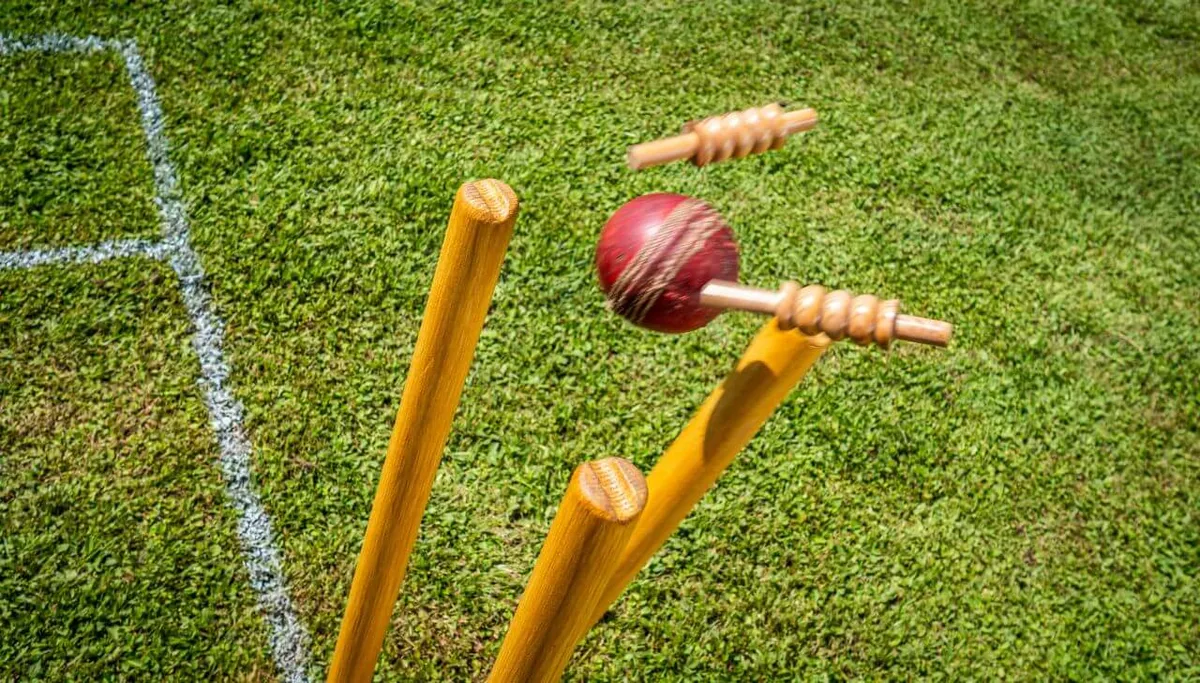
A carrom ball in cricket is a delivery that a spinner flicks out of the hand using a bent middle finger, instead of rolling it off the fingers or spinning it with the wrist.
That flick can make the ball turn either way, which makes it hard for the batter to read.
It takes its name from the board game carrom, where players flick a striker across the board with a bent finger. A bowler uses the exact same snapping action to send the ball down the pitch.
How a Carrom Ball Is Bowled:
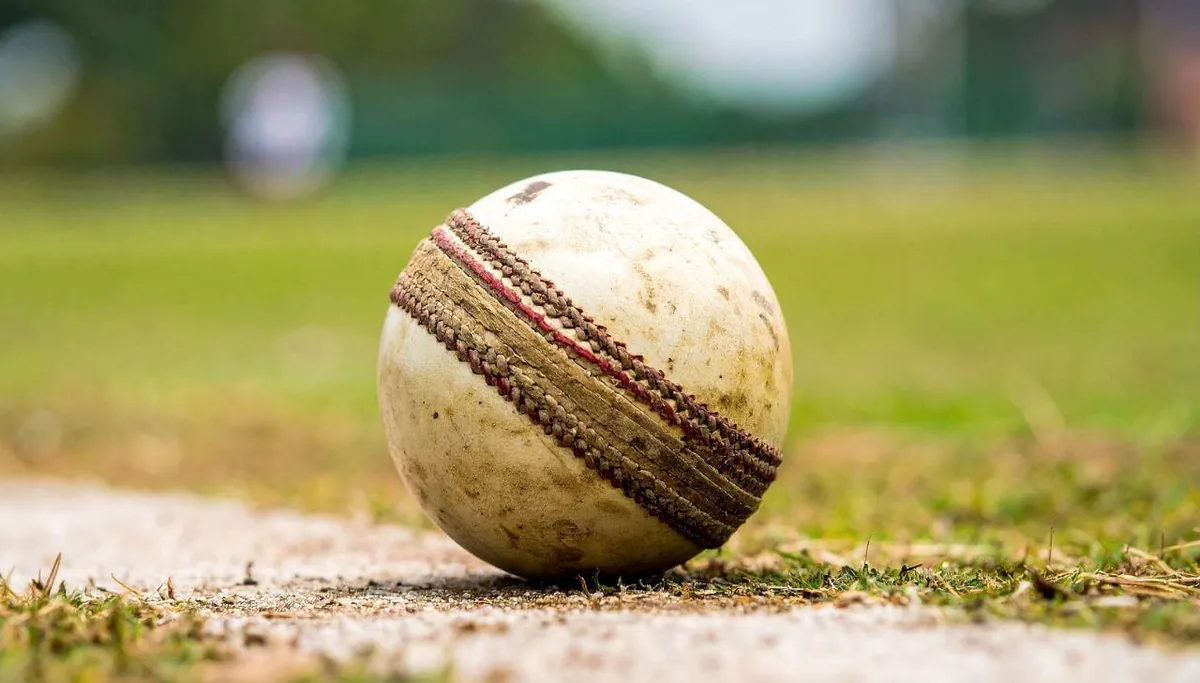
The ball is held between the thumb and a folded middle finger, almost pinched in place. At the moment of release, the bowler snaps that middle finger straight, flicking the ball out and giving it spin.
Because the hand looks much the same every time, the batter cannot easily tell what is coming. That disguise is the whole point of the delivery.
Which Way Does a Carrom Ball Spin?
This is what makes it so tricky. By changing the flick and the angle of the seam, the bowler can make the same-looking ball turn different ways.
It can spin like an off-break, turning into a right-handed batter, or like a leg-break, turning away. It can also be pushed through to go straight on. The batter has to pick the tiny differences at the point of release.
Carrom Ball vs Doosra:

The carrom ball is often confused with the doosra, since both are surprise balls from finger spinners that can turn the other way. The difference is in how they are released.
Aspect | Carrom Ball | Doosra |
|---|---|---|
How it is released | Flicked with a bent middle finger | Out of the back of the hand |
Which way it turns | Either way, depending on the flick | Away from a right-hander |
Legality | Legal, a clean finger flick | Controversial, hard to bowl legally |
Because the carrom ball uses only the fingers, the arm stays straight, so it avoids the throwing debate that follows the doosra.
Who Invented the Carrom Ball?
The flicked delivery is not new. Australians Jack Iverson in the 1950s and John Gleeson in the 1960s both bowled a bent-finger ball long before it had this name.
It became famous in 2008 when Sri Lanka's Ajantha Mendis used it to baffle top batters. Since then, spinners like Ravichandran Ashwin and Sunil Narine have made it one of the game's best-known mystery balls.
(FAQs):
Q1: Is the carrom ball hard to bowl?
A: Yes, very. Flicking the ball with control takes a lot of practice, and getting accuracy as well as spin is harder still. Many bowlers try it but few can land it consistently in a match.
Q2: Can fast bowlers bowl a carrom ball?
A: It is really a spinner's delivery. A handful of pace bowlers have tried a slower-ball version as a surprise, but the flick suits the slow, controlled action of a finger spinner far better.
Q3: What is the difference between a carrom ball and a flipper?
A: A flipper is a leg-spinner's ball squeezed out from under the fingers with backspin, so it skids on low and fast without turning. A carrom ball is flicked to turn, not to skid, so they behave very differently.
Q4: How do batters play a carrom ball?
A: The main clue is the bowler's hand and fingers at release, so batters watch it closely and try to play as late as possible. Even so, top players are regularly beaten by a well-disguised one.