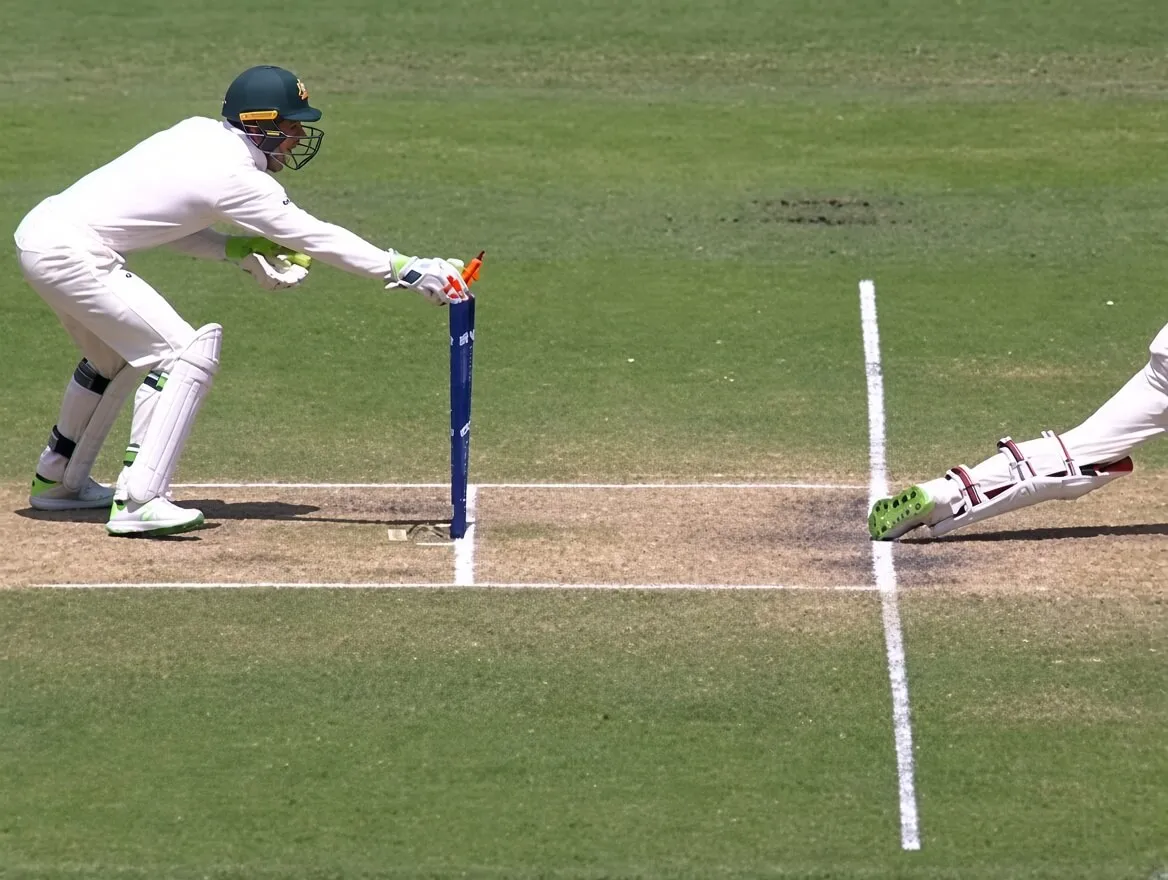
A bye in cricket is a run scored when the ball passes the batter without touching the bat or body, and the batters run while the wicketkeeper fails to gather it. It counts as an extra for the team, not for the batter.
That makes the bye one of cricket's quiet oddities: a run nobody really earned with the bat. But who it counts against, and how it differs from a leg bye, trips up plenty of fans. Here is the full picture.
How a Bye Gets Past the Keeper:
A bye is scored only after the ball beats the wicketkeeper too. Off a legal delivery, once it slips past the gloves, the ball runs loose behind the stumps with no one there to stop it.
That is the batters' cue to run. They can take one, two, or as many as they dare, and if the ball reaches the boundary, it is four byes. This only applies to a legal ball, not a no-ball.
To record them, the umpire raises one open hand straight above the head, telling the scorers to log the runs as extras.
Why a Bye Never Reaches the Batter's Score:

Byes go into the batting team's total as extras, but never onto the batter's own score. The batter gets no credit, simply because they did not hit the ball.
It is a strange quirk of the game. A batter can sprint two hard byes, tiring themselves out, and still see none of it against their name when the innings ends.
Bye or Leg Bye? Telling Them Apart:

The bye is often mixed up with the leg bye, but the difference is simple. It comes down to whether the ball touches the batter at all.
Aspect | Bye | Leg Bye |
|---|---|---|
What the ball touches | Nothing, not bat or body | The batter's body, not the bat |
Condition | The batters just run | Batter must play a shot or try to avoid it |
Counts as | A team extra | A team extra |
So, a bye means no contact at all, while a leg bye means the ball struck the body rather than the bat. Even then, a leg bye only stands if the batter offered a shot or tried to move away.
Where Byes Sit in the Extras Column:
A bye is only one of cricket's five types of extra. The others are leg byes, wides, no-balls, and penalty runs.
Each has its own cause. A bye or leg bye comes from a ball the keeper could not stop, a wide or no-ball comes from the bowler, and penalty runs are handed out for breaches of the laws.
What Byes Reveal About the Wicketkeeper:
Byes are really the wicketkeeper's stat. A sharp keeper lets almost none through, so a low byes total is a quiet sign of a clean day behind the stumps.
Keeping wicket in club games, byes were the runs I hated most. They felt entirely on me, since a ball I should have gathered had just cost my team a run.
When the byes column climbs, it usually points to a tough pitch, awkward bounce, or a keeper struggling to read the bowling. In a close finish, that handful of extras can be the margin between winning and losing.
Conclusion:
A bye is a run that slips through when nobody lays a bat or glove on the ball. It rewards the batting side without rewarding the batter, and quietly holds the keeper to account. Small as it looks, it can still tilt a close match.
(FAQs):
Q1: Do byes count against the bowler?
A: No. Byes are never charged to the bowler, so they do not affect a bowler's economy rate. They are logged as team extras and reflect on the wicketkeeper instead.
Q2: Can you score four byes?
A: Yes. If the ball beats the keeper and runs all the way to the boundary, the batting side is given four byes, just like a boundary struck off the bat.
Q3: Does a bye count as a ball faced?
A: Yes. A bye comes off a legal delivery, so it counts as a ball in the over and a ball faced by the batter, even though no runs go to their name.
Q4: Can you be out off a bye?
A: Yes. Since the batters are running, a run out is possible off a bye if a fielder breaks the stumps before a batter makes their ground.